Contemporary Fantasy · 2001
American Gods
by Neil Gaiman
A road novel about old gods stranded in a country that stopped believing in them.
Genre guide
Magic set in or near the world we recognize, told with a literary eye.
Contemporary fantasy puts the impossible inside a recognizable present or recent past. The magic may be hidden, half-believed or simply part of how things are, but the setting stays close to the one a reader lives in. It is the broadest of our six genre pages, and the one that borrows most freely from its neighbors.
The anchor is the setting: modern cities, ordinary houses, recognizable institutions. Magic arrives as an intrusion, a secret or a quiet fact of life. Books like Neverwhere and American Gods treat the real world as a surface with older things moving underneath it. The Night Circus steps back to the nineteenth century but keeps the same feel: wonder placed inside a world that otherwise obeys our rules.
Tone tends to matter more than mechanics. Many contemporary fantasies are character-driven, slower than their urban cousins, and happy to leave their magic unexplained. Prose style is often a selling point in itself.
Urban fantasy is the closest relative, and the line is soft. Urban fantasy usually runs on series, investigations and a visible supernatural community; contemporary fantasy more often runs on mood, theme and single books. Compare Storm Front with Piranesi and the difference in contract is obvious, even though both use magic in a modern frame.
Magical realism shares the real-world setting but treats the marvelous as unremarkable and rarely explains it. Contemporary fantasy usually lets characters notice, and be changed by, the strangeness. Epic fantasy, by contrast, builds a whole invented world. Our longer comparison is in Urban fantasy vs contemporary fantasy.
Short, self-contained books are the gentlest door in. The Ocean at the End of the Lane is compact and emotionally direct, while The Invisible Life of Addie LaRue offers a more commercial, plot-forward entry. If you enjoy those, the Start with contemporary fantasy path continues in order.
The edges of this genre are deliberately generous. A book set in the past can still count if its magic behaves as an intrusion on a recognizable world, which is why Jonathan Strange & Mr Norrell sits here beside modern stories. What we look for is a shared contract with the reader: the world is mostly ours, the strangeness matters, and the author cares more about meaning than about system. When a book builds a full secondary world, we send it to epic fantasy. When it explains its supernatural society and runs on cases, we send it to urban fantasy. Many books could go either way, and we say so on their pages.
Fantasy that happens in the real world is older than the genre label. Ghost stories, fairy tales set in named villages and Victorian tales of hidden doors all fed it long before bookstores had a shelf for it. The modern form took shape in the second half of the twentieth century, when writers began to treat the real world as a place that could be haunted by myth without apologizing for it. Little, Big is an early, strange landmark in our catalog: a family saga in which the fairy realm is a quiet neighbor.
The 1990s and 2000s brought a wave of readers who wanted the pleasures of fantasy without learning a map. Neverwhere and American Gods gave that audience a London beneath London and a road across America, both written in a warm, ironic, storytelling voice. Then Jonathan Strange & Mr Norrell showed that the mode could carry footnotes, history and a very long page count.
Over the last fifteen years the center of gravity has moved toward the intimate and the literary. The Night Circus and Piranesi are both about enclosed, enchanted places, and both ask the reader to trust mood over explanation. Premises have also sharpened. A single strong idea, such as a woman nobody can remember, now often organizes a whole novel, which is the engine of The Invisible Life of Addie LaRue.
At the same time the label has widened to include retellings, historical settings and wider voices. Sorcerer to the Crown brings Regency manners together with questions of race and empire. Circe takes a figure from Greek myth and gives her a long, interior life. The common thread is not setting but stance: the world is ours, and the strangeness is allowed to mean something.
Think of four rough flavors. The hidden-city kind, led by Neverwhere, is brisk and quest-shaped. The mythic kind, as in American Gods and Anansi Boys, borrows old stories and lets gods walk through ordinary scenes. The enclosed-wonder kind, such as The Starless Sea, builds a self-contained place of books, doors and rituals. The historical kind steps back a century or two but keeps the same contract.
A fifth flavor has become common in recent years: the warm, low-stakes comfort book. The House in the Cerulean Sea is the clearest example in the catalog. It shares the real-world frame, but its goal is reassurance and belonging, not unease. If you find the eerie flavors too cold, try this one; if you find the cozy ones too soft, move toward the mythic or historical ends.
Because the magic is rarely a puzzle, craft shows up elsewhere. Start with voice. A good contemporary fantasy has a narrator whose way of noticing makes the strangeness believable, whether that is the dry humor of Anansi Boys or the careful, cataloguing mind of Piranesi. If the first twenty pages do not give you a voice you want to follow, the rest rarely improves.
Next, check the ratio of wonder to meaning. The weaker books in this vein offer atmosphere with nothing underneath it: lovely images that do not change anyone. The stronger ones tie each marvel to something a character wants or fears. Finally, look at endings. Many books in this mode end quietly, and a quiet ending is not a failed one, provided the emotional question the book raised has been answered.
Set The Night Circus beside The Starless Sea. Both come from the same author and both love enclosed, enchanted spaces. The first has a tightly designed central contest and a romance that keeps pulling the structure forward. The second wanders more, nests stories inside stories and puts its faith in a bookish sense of play. A reader who liked the first for its clear shape may find the second diffuse; a reader who liked the first for its imagery may prefer the second. Now set either against The Ocean at the End of the Lane, which is short, narrated from memory and far less decorative. Same genre, three different contracts. That is why the genre name alone is a weak guide, and why we describe tone and pace on each book page.
The most frequent mismatch is expecting a plot machine. Readers who come from series fantasy often open American Gods expecting a quest that moves at a steady clip and find a road novel with long detours. The detours are the point, but it helps to know that before page one. The reverse also happens: readers who love lyrical prose pick up a fast book and find it thin.
A second mismatch is the unexplained magic. If you want to know exactly what a spell costs, this genre will frustrate you more often than it pleases you; try our guide to magic systems and look toward epic fantasy instead. A third is the assumption that all of it is gentle. The Magicians and Babel sit under the same broad label and are far from comforting, so check the tone tags.
If you read slowly and love sentences, try Piranesi, Circe or The Night Circus. If you want humor and momentum, try Anansi Boys or Sorcerer to the Crown. If you want a single, short evening, The Ocean at the End of the Lane is the obvious pick. If you like big, immersive books and have time, Jonathan Strange & Mr Norrell and The Golem and the Jinni reward patience, and the second continues in a sequel. If you came to fantasy through school stories, The Magicians is a sharp, sometimes bitter take on that wish. If you want a book that questions the portal door itself, The Ten Thousand Doors of January is the one to pull from the shelf.
Most contemporary fantasy asks less commitment than its neighbors. Many of the best-known titles are single volumes, so a reader can finish one in a week and walk away satisfied. That makes the genre a good place to test your taste before a long series. Lengths still vary enormously, from the short Piranesi to the very long Jonathan Strange & Mr Norrell. A sensible plan is to match length to season. Short books suit busy weeks and reading slumps. Long ones suit holidays, when you can sink in without breaks, since their pleasures depend on accumulation. Our starter path uses this logic, moving from the shortest titles to the longest.
Some books sit on a fence, and it is useful to see why. Storm Front is set in a modern city with hidden magic, yet it is filed with urban fantasy because a case drives it and a series is built around it. Kafka on the Shore shares the real-world frame but treats its oddities as unremarkable, which moves it toward magical realism. Gideon the Ninth is set in an invented far-future world, so its place here depends on tone and wit more than on geography.
A useful test: ask what the book wants you to do with the strange element. If it wants you to solve it, you are in urban fantasy. If it wants you to accept it, magical realism. If it wants you to be moved or unsettled by it while the world carries on, you are most likely in contemporary fantasy. Our longer comparison works through more examples.
Because this is a broad label, a good reading order moves by mood and not by publication date. Begin with whichever book matches your current appetite, then step sideways to a book that shares one trait and differs in another. After a short, intimate novel, try a longer one that keeps the voice but widens the canvas. After a witty adventure, try something quieter. This approach keeps the genre from feeling repetitive, since its range is much wider than any single title suggests.
Avoid reading three books of the same flavor in a row. The mythic road novel, the enclosed-wonder novel and the hidden-city quest each have their rhythms, and readers who stack them often report that the effect fades. Mixing flavors keeps the strangeness fresh, and it shows you which strand you truly prefer. The books filed here are enough to try every strand without repeating yourself.
It is fair to name the limits. Contemporary fantasy seldom offers battles at scale, detailed political systems or magic you can master by studying a chart. It rarely promises a tidy series with a clear map of what comes next. Those pleasures live in epic fantasy and urban fantasy respectively. What it offers instead is atmosphere, voice, a sense that ordinary life has a second layer, and endings that tend to land emotionally and not mechanically. If that trade appeals, you are in the right place. If it does not, you will save time by turning to a neighbor genre, and nothing about that is a failure of taste.
25 books
Contemporary Fantasy · 2001
by Neil Gaiman
A road novel about old gods stranded in a country that stopped believing in them.
Contemporary Fantasy · 2004
by Susanna Clarke
English magic returns during the Napoleonic Wars, and it is far less polite than its practitioners.
Contemporary Fantasy · 2005
by Neil Gaiman
A comedy of embarrassed sons, trickster gods and a family inheritance nobody asked for.
Contemporary Fantasy · 2006
by Naomi Novik
Napoleonic naval warfare meets dragon aviation, and a captain's life changes when an egg hatches on his deck.
Contemporary Fantasy · 2009
by Lev Grossman
What happens when a fantasy-obsessed teenager gets everything he wished for, and it is not enough?
Contemporary Fantasy · 2013
by Helene Wecker
Two supernatural newcomers in 1899 New York try to pass as ordinary immigrants.
Contemporary Fantasy · 2015
by V. E. Schwab
Four Londons, one smuggler who crosses between them, and a thief who wants to follow.
Contemporary Fantasy · 2015
by Zen Cho
A Regency comedy of manners where magic is fading and the new Sorcerer Royal is neither welcome nor trusted.
Contemporary Fantasy · 2018
by Madeline Miller
The witch of Greek myth gets her own voice, across centuries of exile and discovery.
Contemporary Fantasy · 2019
by Erin Morgenstern
A graduate student finds a mysterious book and, through it, a buried world of stories.
Contemporary Fantasy · 2019
by Alix E. Harrow
In the early twentieth century, a girl in a wealthy man's household finds a book about doors that open onto other worlds.
Contemporary Fantasy · 2020
by Susanna Clarke
A gentle man keeps a journal inside a house of endless halls, statues and tides.
Contemporary Fantasy · 2020
by V. E. Schwab
A woman who bargained to live forever is forgotten by everyone she meets, until someone remembers.
Contemporary Fantasy · 2020
by TJ Klune
A by-the-book caseworker visits an island orphanage for magical children and begins to question his rules.
Magical Realism · 1981
by John Crowley
A multigenerational family saga in which the fairies are close by and mostly out of sight.
Urban Fantasy · 1996
by Neil Gaiman
A London that runs on puns, and a second city hiding in its cracks.
Magical Realism · 2005
by Haruki Murakami
Two parallel stories, a runaway teenager and an aging man who talks to cats, slowly drift toward each other.
Epic Fantasy · 2007
by Patrick Rothfuss
An innkeeper tells the true story of his own legend, and the telling is the whole point.
Magical Realism · 2011
by Erin Morgenstern
A black-and-white circus that opens at dusk is also the arena of a hidden contest.
Magical Realism · 2013
by Neil Gaiman
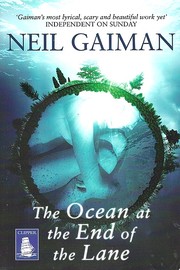
A middle-aged man returns to his childhood lane and remembers what he tried to forget.
Dark Fantasy · 2015
by Scott Hawkins
A strange, savage, sometimes funny novel about a library whose keepers were raised to be gods.
Dark Fantasy · 2019
by Tamsyn Muir
Sword-wielding, meme-fluent necromancy in a decaying space gothic, with a locked-house mystery at its core.
Dark Fantasy · 2020
by Silvia Moreno-Garcia
A socialite goes to a rotting mountain mansion in 1950s Mexico and finds the house is the least of the problem.
Dark Fantasy · 2020
by Naomi Novik
A magic school with no teachers, monsters in the halls and a narrator who has no patience for sentiment.
Dark Fantasy · 2022
by R. F. Kuang
A dark-academia alternate Oxford where translation powers an empire and complicity has a price.