Dark Fantasy · 1984
The Black Company
by Glen Cook
A mercenary company's physician-annalist records a war in which neither side is clearly good.
Genre guide
Fantasy where violence, dread and moral compromise carry real weight.
Dark fantasy is defined by atmosphere and consequence more than by gore. It covers grim worlds, gothic horror, morally compromised heroes and stories where victory costs something. The label is broad, so it helps to know which kind of dark you want.
The common thread is that harm is not decoration. Characters are hurt, change and sometimes do terrible things. The Blade Itself gets there through cynical, sharp-edged humor and a world of tired violence. Mexican Gothic gets there through dread, decay and a house that feels wrong. Gideon the Ninth mixes macabre imagery with irreverent banter.
Many dark fantasies feature antiheroes or morally gray leads, and several are structured around institutions or systems that grind people down, as in The Poppy War.
Grimdark is a subset: cynical, violent and skeptical of heroism. Not all dark fantasy is grimdark; gothic and horror-leaning books like Mexican Gothic are dark without being cynical about people in general. Epic fantasy can be dark too, but the genre label tends to follow the scale of the world, with dark fantasy following the mood.
Compared with urban fantasy, dark fantasy rarely offers the comfort of a returning cast and a case that closes neatly. Compared with horror, it keeps a secondary world or a magical system at its center, so wonder and menace share the page.
Start with the kind of dark you enjoy. Gothic: Mexican Gothic. Dry and brutal: The Blade Itself. Strange and playful: Gideon the Ninth. For a wider orientation, read A beginner's map of dark fantasy or follow the Dark and atmospheric reads path.
Dark fantasy is a mood label, which makes it the most porous of our six genres. We use it when darkness is the dominant effect and not a single scene or subplot. A cheerful adventure with one grim death does not qualify, while a quiet, dread-soaked house story might. The label also carries content weight: violence, cruelty and loss tend to be present and unsoftened. Because tastes vary so widely, we try to describe the kind of dark on each book page: gothic, cynical, military, strange or systemic. Choosing among those matters far more than choosing the label itself.
One practical tip: sample the first chapter before you commit. Dark fantasy usually announces its register early, through the narrator's attitude to violence, humor and hope. If the opening feels too bleak or too flippant for your mood, that is useful information, and you can set the book aside for another season without any sense of failure.
Darkness in fantasy is old. Folktales were never gentle, and the gothic novel and weird fiction of the nineteenth and early twentieth centuries supplied dread, decay and doomed families. What changed in the late twentieth century was the willingness to apply that sensibility to long, serious secondary-world fiction. The Black Company is an early example in our catalog: a mercenary unit narrated by a weary soldier, with none of the usual glow around heroism. A second wave arrived with cynical, character-led epics. A Game of Thrones made consequence a central feature of mainstream fantasy, and The Blade Itself pushed wit and moral ambiguity to the front. More recently the label has absorbed horror-inflected gothic, as in Mexican Gothic, and political darkness, as in Babel.
It helps to name the kind. Gothic dark is about houses, secrets and slow dread: Mexican Gothic. Cynical dark is about hard people in a hard world, with humor as armor: The Blade Itself. Military dark follows soldiers and the cost of orders: The Black Company and The Poppy War. Strange dark delights in the macabre and the bizarre: Gideon the Ninth and The Library at Mount Char. Systemic dark is about structures that crush people, as in The Fifth Season and Babel. A reader who loves one kind will not automatically love another, and the differences in tone are larger than the differences in subject.
Shock is cheap and consequence is hard. A well-made dark fantasy earns its violence by making it matter to the people who suffer or inflict it. Ask whether the book lets characters change, remember and carry what happened, or whether cruelty is just a mood effect. The first is serious darkness. The second is decoration, and it tends to feel monotonous after a hundred pages.
Also ask whether the book has any tenderness at all. The strongest examples keep a small area of warmth, a friendship or a joke, so that loss registers. The Fifth Season is bleak in subject yet precise about love between its characters. The Blade Itself uses humor in the same way. Books that remove every sign of warmth often read as posturing.
The first mismatch is content. Dark fantasy varies from restrained dread to graphic violence, and the label alone does not tell you which. Prince of Thorns has a brutal teenage antihero and does not look away, while Mexican Gothic is more about atmosphere. Check the audience line on each book page, and sample the opening chapter. The second mismatch is pace. Readers who expect gloomy action sometimes pick up a slow gothic or a dense military epic and stall. Gardens of the Moon is the extreme case: a very large, unguided world that rewards a second reading. The third is hope. Some readers want darkness with a payoff, and some books are grim to the end; choose with that preference in mind.
For horror readers who want a gateway: Mexican Gothic, then The Library at Mount Char. For readers who like banter in the dark: Gideon the Ninth and The Lies of Locke Lamora. For readers who want a serious, large-scale political book: The Poppy War or A Game of Thrones. For readers who like school settings with teeth: A Deadly Education is the sharpest choice, a school where the building itself is a threat. For readers interested in structure and ideas: The Fifth Season. For readers who want a challenge of scale and patience: Gardens of the Moon. Our beginner's map offers a longer routing.
The Blade Itself and A Game of Thrones are often named together, and the comparison is useful. Both abandon the fantasy assumption that good people win. But Abercrombie's book is smaller in scope, sardonic and built around a few damaged individuals, while Martin's spreads across houses and viewpoints and takes its time over politics. A reader who wants a quick, funny and bleak read should begin with the first. A reader who wants a large, political book about rival families should begin with the second, understanding that it is a very long commitment. In either case, expect the pleasure to come from character, not from moral comfort.
A few habits make the genre easier to live with. Alternate heavy books with lighter ones; the dark path on our site does this on purpose, placing the funny Gideon the Ninth between two harsher titles. Read the first chapter before committing, since the register is usually set there. And decide in advance what you will not read, whether that is a particular kind of violence or a theme that hits too close. It also helps to remember that dark fantasy is rarely nihilistic. Most of the books here care about something, whether justice, loyalty or the possibility of change, and the darkness gives that care weight. Readers who treat the genre as a test of endurance often miss what the better books are doing.
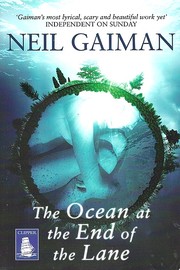
Dark fantasy borders epic fantasy on one side and horror on the other. Mistborn has an oppressive empire and a hard-edged heist, yet its arc is hopeful, so it sits mainly in epic fantasy. The Ocean at the End of the Lane has real menace, but its tone is elegiac, which pulls it toward contemporary fantasy and magical realism. Another border case is Uprooted, which has a haunted forest and body-horror touches inside a fairy tale that ends warmly. We list it under romantic fantasy and keep a dark tag on it. The rule we apply is dominance: if the effect you carry away is dread, loss or cruelty, the book belongs here; if it is a feeling of resolution, it belongs elsewhere with a note.
Most dark fantasy contains violence, and many books include cruelty to children, abuse, war crimes, torture or death on the page. We do not list spoilers, but we try to name the register of each book in its audience line. As a general guide, Prince of Thorns, The Poppy War and The Library at Mount Char are the most graphic in the catalog, while Mexican Gothic and Gideon the Ninth are more atmospheric and macabre than graphic. If you are sensitive to a specific theme, read a spoiler-free review that addresses it, or ask a bookseller. The genre's reputation for extremity is partly earned and partly exaggerated, and a surprising number of books marketed as grim are gentler than their covers suggest. Equally, some quiet-looking books hide hard material.
Many readers assume dark fantasy means humorless, and the opposite is closer to the truth. The most readable examples use wit to keep the reader moving. The Blade Itself has some of the driest humor in the catalog, and Gideon the Ninth runs on sarcasm. The Lies of Locke Lamora mixes banter with sudden brutality. This matters for choosing. If you are drawn to dark themes but worry about heaviness, begin with the funny end of the range. The humor does not cancel the darkness, but it gives you something to hold while the story turns.
Dark fantasy comes in both forms. Standalones such as Mexican Gothic, The Library at Mount Char and Babel deliver the full experience in one volume, which suits readers who want to test their tolerance. Series such as The Fifth Season and The Blade Itself allow character arcs to unfold over several books, and often become more rewarding as they go. If you are new, sample a standalone first. If you finish and want more of the same weight, step into a series. Our series order guide covers the practical details.
21 books
Dark Fantasy · 1984
by Glen Cook
A mercenary company's physician-annalist records a war in which neither side is clearly good.
Dark Fantasy · 2006
by Joe Abercrombie
A sardonic, bruised ensemble opener that treats heroism as a job nobody is good at.
Dark Fantasy · 2011
by Mark Lawrence
A short, merciless first-person tale told by a teenage warlord you should probably not trust.
Dark Fantasy · 2015
by Scott Hawkins
A strange, savage, sometimes funny novel about a library whose keepers were raised to be gods.
Dark Fantasy · 2015
by N. K. Jemisin
On a world prone to apocalyptic seismic disasters, three women's stories converge in a book about survival and oppression.
Dark Fantasy · 2018
by R. F. Kuang
An orphan's rise through a brutal military academy turns into a reckoning with the cost of war.
Dark Fantasy · 2019
by Tamsyn Muir
Sword-wielding, meme-fluent necromancy in a decaying space gothic, with a locked-house mystery at its core.
Dark Fantasy · 2020
by Silvia Moreno-Garcia
A socialite goes to a rotting mountain mansion in 1950s Mexico and finds the house is the least of the problem.
Dark Fantasy · 2020
by Naomi Novik
A magic school with no teachers, monsters in the halls and a narrator who has no patience for sentiment.
Dark Fantasy · 2022
by R. F. Kuang
A dark-academia alternate Oxford where translation powers an empire and complicity has a price.
Epic Fantasy · 1996
by George R. R. Martin
Noble houses scheme for a throne while something old and cold stirs at the edge of the map.
Epic Fantasy · 1999
by Steven Erikson
A famously demanding epic that drops you into a vast war with no explanations and trusts you to keep up.
Epic Fantasy · 2006
by Brandon Sanderson
A heist crew tries to topple an immortal ruler in a world of ash, mist and metal-fueled powers.
Epic Fantasy · 2006
by Scott Lynch
A crew of canal-city thieves runs elaborate cons on the rich until a bigger game catches them.
Contemporary Fantasy · 2009
by Lev Grossman
What happens when a fantasy-obsessed teenager gets everything he wished for, and it is not enough?
Magical Realism · 2013
by Neil Gaiman
A middle-aged man returns to his childhood lane and remembers what he tried to forget.
Romantic Fantasy · 2015
by Sarah J. Maas
A hunter from a poor mortal family is pulled into a fae realm where beauty and danger share the same table.
Romantic Fantasy · 2015
by Naomi Novik
A village girl is taken by a wizard to learn magic, with a haunted forest pressing in on every valley.
Magical Realism · 2017
by Katherine Arden
In a snowbound medieval Russian village, a girl who can see the household spirits faces a new religion that wants them gone.
Romantic Fantasy · 2018
by Naomi Novik
A moneylender's daughter with a talent for trade finds herself bargaining with winter itself.
Epic Fantasy · 2020
by Rebecca Roanhorse
A pre-Columbian-inspired epic of rival powers, ritual and prophecy gathering toward a solar eclipse.