

Cover image via Open Library, where available.
Contemporary FantasyUrban Fantasy
Anansi Boys
by Neil Gaiman · 2005
A comedy of embarrassed sons, trickster gods and a family inheritance nobody asked for.
Anansi Boys centers on a nervous, rule-following Londoner whose life tilts when his estranged father dies and a brother he never knew about turns up. The brother is everything he is not: confident, charming and unburdened by consequences. Their collision opens the door to the world of trickster stories, in which a spider god is a family secret and not a legend.
The tone is closer to a comic novel than to a dark fantasy. Dialogue is quick, the narrator enjoys digressions, and the mythic material is worn lightly. There is real threat underneath, but the book keeps returning to embarrassment, family friction and the small cruelties of siblings.
Where it sits in the genre
Gaiman built the book around West African and Caribbean trickster traditions, especially the Anansi stories, and introduced a minor character who first appeared in American Gods. It is not a sequel, and it can be read first. Within contemporary fantasy it stands out as a rare mainstream novel that treats folktale as a source of comedy and family drama, rather than solemn mythology. It is often recommended to readers who found the larger book too heavy.
Voice and structure
Anansi Boys is the most openly comic of Gaiman's novels. The narrator is a talkative storyteller who interrupts himself, jokes about his own characters and tells you what a person is like before the person does anything. Dialogue carries a lot of the book, and much of it is two people getting on each other's nerves.
The plot is built from a few clear moves. A mild man called Fat Charlie goes to his father's funeral, learns he has a brother, and invites that brother into his life with predictable results. From there the book alternates between Charlie's attempts to restore order and his brother's habit of wrecking it. The chapters are short, the pace is steady, and the mood stays closer to farce than to horror, even when the stakes rise.
Setting and magic
The story shuttles between London, Florida and a Caribbean island, and it draws more from voice and food and family than from landmarks. Charlie's London is an office, a flat and an anxious routine. The other side of the book is a mythic space where stories are older than the people in them, and Gaiman keeps it deliberately vague so that it feels like a place you can only enter by accident.
Magic here is song, story and the power of a good lie. The trickster tradition behind it treats narrative as a tool: whoever tells the best version wins. That makes the cost social more than physical. People are embarrassed, outmaneuvered, tricked out of their names or their jobs, and the true threats are the ones that cannot be talked around.
Themes in practice
The main theme is inheritance, and the book shows it through embarrassment. Charlie has spent his life managing the shame of a father who sang in public and made him cringe. The novel lets him discover that the thing he ran from is the thing he is made of, and it does this through scenes that are funny first and tender later.
A second theme is identity as performance. The two brothers each play a role, one cautious and one reckless, and the book gradually asks how much of a self is chosen and how much is handed down. Women characters have more practical authority than the men in many scenes, and Gaiman uses that for both comedy and warmth.
How it compares and who it suits
If American Gods is a long road through a dim, elegiac America, this is its sunny relative. A minor character links the two, but the connection is thin, and nothing needs to be read first. Neverwhere is the closest in tone, with another ordinary Londoner dropped into a hidden order. For humor combined with a heavier emotional core, The Ocean at the End of the Lane is the dark cousin.
Anansi Boys suits readers who want to laugh while reading fantasy, and it is a good entry point to Gaiman for anyone put off by grim material. It also suits people interested in trickster folklore treated as comedy. Readers who want rich worldbuilding or lyrical depth may find it slight, since the story cares more about two men than about the mythic structure behind them.
Why the comedy works
Comic fantasy is hard to write because jokes can flatten the stakes. Anansi Boys avoids this by building its humor out of character rather than gags. Fat Charlie's embarrassment, his fiancée's mother, and his brother's easy confidence all produce laughs because they feel true to people. The jokes grow from social discomfort, which is the most reliable source of comedy there is.
The result is a book where you can laugh at a scene and then notice, a page later, that something had real weight. A funeral becomes farce and then sorrow. A prank becomes a threat. Gaiman controls that shift carefully, and it is why the book rewards a second read more than a quick skim suggests.
Two brothers, two ways of being a person
The core of the book is a contrast. Charlie is careful, anxious and used to taking up as little room as possible. His brother is warm, quick and cheerfully careless about other people's lives. Neither is simply right. Charlie's caution has made him smaller, and his brother's freedom costs others dearly.
This is why the book works as a family story rather than a prank farce. Each brother needs something the other has. The best scenes put them in a room and let the difference do the work. If you enjoy fantasy in which the emotional line is a relationship rather than a quest, this fits alongside the sibling-style tension in A Darker Shade of Magic, though the tone there is far more adventurous.
Trickster stories as a mode, not a costume
The book borrows from the tradition of Anansi tales, which come from West Africa and traveled to the Caribbean with the people who told them. In those stories, a small, clever figure survives by talking, bargaining and bending rules. Gaiman keeps that spirit rather than reproducing particular tales.
What this means for readers is simple. Cleverness beats strength here. A problem will often be solved by a bit of misdirection, not a fight, and the ending depends on stories and talk more than force. The same principle drives the comic tension throughout. If you are curious about how the genre handles folk traditions more seriously, Spinning Silver is a good contrast, with a similar love of bargains but a very different mood.
The villain problem
Villains in comic fantasy often feel like an afterthought, and Anansi Boys has one who is deliberately unsettling in a mild-mannered way. He is a man whose polite manner does the damage, and the book makes his ordinariness part of the threat. Some readers find this effective, and some find it shallow next to the larger, stranger menaces in Gaiman's other books.
The honest answer is that the antagonist is not the reason to read this novel. He functions as pressure on the brothers, and the book is happiest when it returns to them. If you want a memorable monster, Neverwhere offers a stronger pair.
A good book for mixed company
It is among the easier Gaiman titles to recommend across ages and tastes. There is little graphic content, the plot is simple to follow and the humor travels well. It makes a good choice for a book club where members range from regular fantasy readers to people who rarely pick the genre up.
It also pairs well with other warm, funny fantasy. The House in the Cerulean Sea shares its affection for an uptight lead who learns to loosen up, though it is much gentler. Anyone who enjoys that kind of redemption through absurdity will find the same pleasure here, with a sharper edge.
Pacing and the saggy middle
The middle stretch has a few subplots that spin their wheels, particularly a long business-world thread that exists mostly to set up complications. A reader in a hurry may feel the story circling. It picks up again as the mythic material takes over and the brothers' arcs converge.
If your attention drifts, read in larger sittings rather than a chapter a night. The comic momentum builds across a session, and the sillier set pieces land better when you remember the earlier setup. Short chapters make this easy, and the book is small enough to finish over a weekend.
Women with the real power
One of the pleasures of this book is how often its female characters know exactly what they are doing. A formidable fiancée, her sharp-eyed mother, and a trio of formidable elderly neighbors all run circles around the men. Gaiman uses them for comedy, but he also lets them be competent, which gives the book a steady center whenever the brothers spin out.
This is worth noting if you are choosing between his novels. In some of his longer books, women appear mostly as guides or victims. Here they are agents with opinions and plans, and the story depends on them. It is a small shift, and it makes the book feel warmer and more balanced than its farcical surface suggests.
A quick reading order
- Start here if you want laughter first and mythology as a side dish.
- Move to Neverwhere next if you liked the Londoner-out-of-his-depth setup and want something with more menace.
- Try American Gods when you are ready for a slower, darker, more elegiac book.
- Finish with The Ocean at the End of the Lane for the most personal and quiet of the four.
Why humor is hard to place in a genre
Booksellers and critics often shelve this novel awkwardly because comic fantasy does not sit neatly with either urban fantasy or magical realism. It has the modern setting of the first and the casual acceptance of the strange found in the second, but its goals are different. It wants you to laugh and to feel for a family.
If you are browsing by genre, look at contemporary fantasy as the closest fit. That heading covers stories where the ordinary world is the main stage and the fantastic arrives sideways. It will lead you to books with a similar sensibility, even when their moods differ.
Songs, names and why they matter
Singing carries unusual weight in this novel. The father's embarrassing performances, a stolen voice and a few key musical moments all tie into the book's idea that a song can change a situation, and that a name is something you can lose. These threads are light-handed and amusing at first, then become important.
If you like fantasy in which language is the real power, notice how often a conversation, a story or a song decides a conflict. It is a quiet echo of the trickster tradition, where wit is the weapon of the small, and it gives the book more unity than its comic surface suggests.
How it reads
- Comic voice with a playful, storytelling narrator
- Trickster mythology treated as family inheritance
- A sibling relationship at the center of the plot
- Mix of London and Caribbean settings
- Light on lore, heavy on character and dialogue
Read it if
- You want fantasy that is funny first and mythic second
- You like stories about difficult families and mistaken identity
- You liked Gaiman's voice but want something brisker than a road epic
Maybe skip it if
- You are looking for serious, weighty mythology
- You dislike broad comedy and farcical set pieces
Who it is for
A good fit for adults and mature teens who enjoy humor. Content is mild by Gaiman standards, with some peril and a little crude language.
Reading notes
Fully standalone. You do not need to have read American Gods first.
Themes and tropes
Myth and FolkloreIdentity and TransformationLove and ObligationReluctant Hero
If you like this, try
American Gods
by Neil Gaiman
Same world of gods among mortals, but heavier, slower and more panoramic.
The Rook
by Daniel O'Malley
Offers a similarly dry, comic take on someone caught inside a hidden supernatural bureaucracy.
The House in the Cerulean Sea
by TJ Klune
Pairs warmth and humor with a mild-mannered lead whose ordered life is upended.


More by Neil Gaiman

Urban Fantasy · 1996
Neverwhere
by Neil Gaiman
A London that runs on puns, and a second city hiding in its cracks.
Contemporary Fantasy · 2001
American Gods
by Neil Gaiman
A road novel about old gods stranded in a country that stopped believing in them.
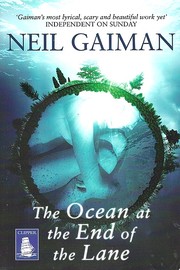
Magical Realism · 2013
The Ocean at the End of the Lane
by Neil Gaiman
A middle-aged man returns to his childhood lane and remembers what he tried to forget.