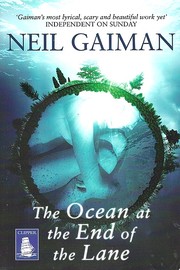
Cover image via Open Library, where available.
The House in the Cerulean Sea
by TJ Klune · 2020
A by-the-book caseworker visits an island orphanage for magical children and begins to question his rules.
Linus Baker is a careful, lonely caseworker for a government department that oversees magical youth. He lives a quiet, gray life until he is sent to evaluate an island orphanage whose residents include some very unusual children and their even more unusual caretaker. The assignment tests everything he has assumed about rules and duty.
The book is warm, gentle and humorous, with a focus on kindness over conflict. The pace is slow and the stakes are largely emotional. It leans on a bureaucratic satire of prejudice that mirrors real-world attitudes, and its heart is the relationships that form over a month of observation.
Where it sits in the genre
TJ Klune's novel became a major word-of-mouth success and is often cited as an emblem of the cozy fantasy movement, which favors comfort and community over grand quests. It belongs to a lineage of whimsical British-style fantasy but places queer love and acceptance at the center. Readers who want low stakes and high warmth have found it a reliable gateway into contemporary fantasy.
Voice and structure
The book is told in a gentle third person that stays close to Linus and shares his habits of mind. The prose is plain, affectionate and a little formal at first, mirroring his careful life, then loosens as he does. Humor comes from his fussiness and from the children, who are better at deadpan than adults.
The structure is simple and episodic. Linus arrives, observes, writes his reports, and the story is organized around days on the island and the small events that change his mind. Chapters often end on a note of warmth rather than a cliffhanger. There is a thin external threat, but the pace is deliberately slow, and the book rewards readers who enjoy conversation scenes and meals.
Setting and magic
The world is close to ours, with a government agency, forms and a gray office culture. The magic is carried by the children and by the island they live on, rather than by spells or systems. The children are a range of unusual beings, and each has a distinctive trait that the story treats as personality rather than as plot machinery.
The rules of magic are intentionally loose. What matters is how society treats those who have it. The cost is not exhaustion or danger but prejudice: suspicion, fear and the limits placed on children who are different. This makes the magic function mostly as a lens for social questions, and the setting works as a safe place where those questions can be taken seriously without darkness taking over.
Themes in practice
Found family is the core, and it appears in practical details such as who sits where at dinner, who is allowed to be loud, and who is asked to help with chores. The children test Linus, and he tests them, and the book shows trust being earned through small acts.
Belonging and outsiders are treated through a bureaucratic satire. Linus's department has procedures that treat magical youth as risks to be managed, and his work has taught him not to question them. The story's central tension is between rules and compassion, and it keeps showing how ordinary duty can become cruelty when no one looks closely. Love and obligation meet in a slow romance that is handled with tenderness.
How it compares and who it suits
The nearest sibling in the catalog is Legends & Lattes, which shares the low stakes and community focus, though Baldree builds it in a sword-and-sorcery world and Klune builds it in a bureaucratic version of ours. For a darker take on children with strange talents and adults who fail them, The Ocean at the End of the Lane is a much more unsettling read.
Bitten tackles pack belonging as a trap, which makes a sharp contrast with the way this book frames chosen family as shelter. The House in the Cerulean Sea suits readers who want comfort, humor and queer romance at a slow pace. It is less suited to anyone seeking complex plotting or high tension. The content is mild, and the romance is gentle rather than explicit.
The satire underneath the sweetness
It is easy to file this novel as a hug in book form and stop there, but the comedy has a target. Linus Baker works inside an institution whose forms, quotas and checklists turn frightened prejudice into routine paperwork. The jokes land because the office feels real: the memos, the supervisors who never need to raise their voices, the colleague who is pleasant while doing harm. Klune is not writing a savage takedown. He is showing how decent, tidy people take part in cruelty without ever deciding to.
That is why the early chapters matter more than their pace suggests. Linus is not a villain who reforms. He is a man who followed instructions so faithfully that he never looked up, and the island asks him to look. Readers who skim the office scenes to reach the children often find the later emotional beats a little less earned. Give the gray opening its due, and the warmth that follows reads as relief instead of decoration.
What the slow pace actually delivers
Slow does not mean empty here. Most chapters are built around a small, concrete event: a dinner, an inspection of the sleeping quarters, a conversation on a hillside, a letter written to a supervisor that gets quietly harder to write honestly. The reports Linus files are a clever device, because the distance between what he is told to record and what he sees grows week by week, and the reader tracks his change through that gap.
If you measure a book by how often something explodes, this will feel thin. If you measure it by how well it builds trust between characters, it is generous. A useful test is the island sequence where the children first treat Linus as a person instead of an adult to be managed. If that scene sounds appealing, the whole book will work for you. If it sounds like filler, no amount of patience later will change your mind.
Handling the cuteness
The children are the book's main draw and its most divisive feature. They are vivid, funny and written with real affection, and the author lets each one have a private fear beneath the quirk. Some readers find them irresistible. Others feel the charm is applied with a heavy hand, particularly in the dialogue, where the children can sound more like a comic ensemble than like kids.
A fair way to approach this is to treat the tone as a deliberate choice, similar to a fable. The book is not trying to be realistic about childhood. It is trying to say that these children deserve to be safe and loved, and it uses exaggeration to make that claim clearly. If you prefer the quieter humor of Legends & Lattes, expect Klune to be louder, more openly sentimental and more willing to stop the plot for a speech.
Romance and the quiet center of the book
The love story is a slow burn that stays mostly in glances, shared tea and acts of consideration. It is easy to miss how much of the book it carries. The romance is the clearest place where Linus has to decide between safety and honesty, and it gives the final stretch its force. Heat is low and nothing is explicit, so readers who want a steamier queer romance in fantasy should look at A Court of Thorns and Roses, though that is a very different book in tone, stakes and intensity.
What the romance does well is make adult loneliness believable. Linus has gone decades without being truly known by anyone, and the book treats that as a quiet injury worth mending. Readers who come for the found-family comfort sometimes say the two adults ended up being their favorite part.
Where it can disappoint
Honest drawbacks are worth stating. The central conflict is resolved in a way that some readers find too tidy, with the institution's menace shrinking sooner than the early chapters promise. The villains are close to caricature, which fits the fable register but reduces suspense. And because the emotional direction is clear from the first act, there is little uncertainty about where the book is going.
None of this is a flaw if you wanted comfort. It is a mismatch if you wanted tension. Before starting, ask yourself whether you want to be reassured or surprised. This book reassures. For a story that uses a similar premise of gentle kindness but keeps real menace nearby, The Ocean at the End of the Lane is the better pick, and it will leave you a good deal less settled.
Choosing between the cozy options
Within the catalog, readers looking for low-stakes warmth have three realistic choices, and they differ in useful ways. This novel is about institutions and acceptance, with a clear social argument. Legends & Lattes is about work and recovery, with almost no argument at all. The Goblin Emperor is about kindness under heavy political pressure, and it asks far more of the reader in names, titles and court customs.
A simple decision rule: pick Klune if you want emotion and humor in equal parts, Baldree if you want brevity and craft, and Addison if you want a slower, richer world and do not mind effort. Many readers move from the first to the second within a week, because the pairing makes a natural weekend of gentle reading.
Rereading and what to read afterward
The book rewards a second visit for a different reason than puzzle-box fantasy does. Once you know where Linus ends up, his early scenes become poignant, and small gestures you read as comic the first time show up as signs of a man already half wanting to be convinced. It is a good comfort reread for hard weeks.
For what to read next, think about which part you loved. If it was the children and their strangeness, try Anansi Boys for another family story full of humor and oddity, with more mischief and more risk. If it was the queer romance and the soft satire, there is no exact twin in this catalog, which is itself worth knowing. If it was the sense of belonging, A Deadly Education offers the opposite emotional temperature, using a school full of danger to ask who gets protected.
Reading it in the right season
Context shapes how this book lands. Readers who pick it up during a stressful stretch, after a heavy epic or a hard year, tend to describe it as exactly what they needed. Readers who pick it up as a critic, looking for formal daring, tend to find it conventional. Neither reaction says much about the book itself. It is built for a particular mood, and it does that job with confidence.
If you are unsure, pair it with something sharper in the same month. The Rook is another story about a bureaucracy that handles the supernatural, but it is brisk, funny and full of danger, so it makes a useful comparison for anyone deciding how much edge they want. Many readers end up preferring one temperament clearly, and the contrast makes that preference easy to see. Both books are warm toward their protagonists, but they ask for very different amounts of tension.
A note on the author's wider approach
TJ Klune writes with an openness about feeling that is unusual in fantasy, where emotion is often implied rather than stated. That openness is the author's signature, and it explains both the devoted audience and the occasional criticism. If this book works for you, the author's other novels share its generosity, though they vary in tone and in how much humor they carry.
As a starting point, this is the most representative and the most widely read. You do not need any other title first, and nothing here is spoiled by what comes after. Treat it as the clearest single sample of a style: warm, direct, comic and concerned with who gets to belong.
How it reads
- Gentle, whimsical tone with a strong moral center
- Found-family at the heart of the story
- Bureaucratic satire as a vehicle for themes of prejudice
- Low-conflict, character-first plotting
- Quiet romance that develops gradually
Read it if
- You want something comforting after heavier reads
- You like found-family stories with whimsical magic
- You enjoy slow, character-driven books
Maybe skip it if
- You want fast plots or sharp edges
- You find sentimental tones too sweet
Who it is for
A good entry point for readers new to fantasy. Gentle overall, with some mild menace and themes of discrimination; the romance is tender and non-explicit.
Reading notes
It reads fully on its own, so no prior knowledge is needed.
Themes and tropes
Found FamilyBelonging and OutsidersLove and ObligationSlow-Burn Romance
If you like this, try
Legends & Lattes
by Travis Baldree
Another comfort read about building community, with a fantasy-adventure setting instead of a modern-ish one.
The Ocean at the End of the Lane
by Neil Gaiman
Also uses a child's view of magic, but with a much darker, more wistful tone.
Anansi Boys
by Neil Gaiman
Shares a light, humorous touch and a story about finding family in unexpected places.
A Deadly Education
by Naomi Novik
An opposite take on a school for magical youth: harsh, dangerous and sharply sarcastic.