Magical Realism · 1981
Little, Big
by John Crowley
A multigenerational family saga in which the fairies are close by and mostly out of sight.
Genre guide
The marvelous treated as ordinary, usually rooted in place, family and memory.
Magical realism presents extraordinary events in a calm, matter-of-fact way inside an otherwise realistic world. It comes from a literary tradition, especially Latin American writing, and it overlaps with fantasy without being the same thing.
The signature move is acceptance: the supernatural happens and no one is astonished. In Like Water for Chocolate, emotion physically transfers through cooking, and the narration treats that as part of life. Kafka on the Shore allows talking cats and strange logic to sit beside everyday Tokyo.
Place, family and memory carry the weight. The book often cares more about what the magic means than how it works, and the plot may be elliptical.
Fantasy usually builds rules or an explicit hidden world; magical realism rarely does. Contemporary fantasy often lets characters investigate the strange. Magical realism lets it pass. Little, Big and The Golem and the Jinni sit nearer the fantasy side, where the marvelous is more openly part of the plot.
The label is also a matter of tradition and culture, and not every book with a dreamy tone qualifies. We use it carefully, and the guide Magical realism for fantasy readers says more.
A short, accessible entry is Like Water for Chocolate. Readers who like a plot underneath can try The Golem and the Jinni. Those who want a dreamlike puzzle can try Kafka on the Shore.
This is the smallest genre on the site and the one where labels are most contested. Magical realism is as much a mode of narration as a genre, and it has deep roots in specific literary traditions. We use it carefully and prefer to explain our reasoning on each book page. Some titles are shelved by publishers as fantasy, some as literary fiction, and some as both. Our aim is to help fantasy readers find books where the marvelous is treated as everyday, so that they know what kind of experience to expect before they begin.
Because the genre is rooted in particular places and histories, it helps to read with some curiosity about the setting. A short note about the author's country, the period or the cultural context can open a book that otherwise feels opaque. You do not need academic knowledge, only a willingness to treat the strange details as clues to what the community values, fears or remembers.
Magical realism is best understood as a literary tradition first and a shelf label second. It is most closely tied to twentieth-century Latin American fiction, where writers combined realist detail with events that overturned physical law and treated both with the same calm. Its techniques spread widely: to Japan, to the Caribbean, to South Asia, to Europe and to North America, each time shaped by local history and belief.
In English-language publishing the term later became a loose marker for any literary novel with a touch of the impossible. That is a wide net, and it is why we use the label with care. Like Water for Chocolate belongs to the original tradition. Kafka on the Shore draws on a different literary culture and a distinct strangeness. Little, Big shows an English-language writer approaching the mode from the fantasy side.
We see three useful strands for fantasy readers. The domestic strand roots the marvelous in kitchens, families and inheritance; Like Water for Chocolate is the clearest case. The dreamlike strand lets logic loosen and symbols multiply, as in Kafka on the Shore. The historical-mythic strand places the marvelous inside a period setting, as in The Golem and the Jinni and The Bear and the Nightingale. A cross-over strand also exists, where the tone of magical realism meets a more openly fantastical plot. The Night Circus and The Ocean at the End of the Lane are examples that lean in that direction. They carry the calm, wondering tone but also contain rules, antagonists and stakes in the manner of fantasy.
Judge consistency of tone. The central risk of the mode is a wobble: a narrator who treats the impossible as ordinary in one scene and stops to marvel at it in the next. The best books hold their register and let the reader's surprise be the only surprise. Then judge specificity. Good magical realism is full of exact detail about food, weather, work and speech, and the marvel is made credible by the accuracy around it.
Finally, judge meaning. The impossible event in these books is usually a way of saying something about grief, history, desire or power. If you can describe what an odd element stands for, and the book still gives you something beyond the symbol, it is working. If the oddities are only decoration, the result feels precious. Plot matters less than in other genres, but a shape should still emerge.
The main mismatch is expecting rules. Fantasy readers often search for the logic of the magic and finish unsatisfied, since the book never intended to provide one. The second mismatch is plot. These books may move by association, season or family generation, and a reader who wants a clear mystery to solve will feel adrift. Kafka on the Shore has threads that do not tie off neatly, by design. A third mismatch is the label itself. Not every dreamy or lyrical fantasy is magical realism, and not every book here is dreamy. Reading the magical realism guide before starting helps, as does a quick look at the setting and period. Knowing the place and history behind the story makes the strange details much richer.
For a short, vivid first book: Like Water for Chocolate. For readers who prefer plot with their wonder: The Golem and the Jinni, which follows two displaced beings in early-twentieth-century New York. For readers who like puzzles and dream logic: Kafka on the Shore. For readers who like folklore: The Bear and the Nightingale, which is set in medieval Russia and feels closer to fantasy. For readers who want a long, immersive family saga with a hidden realm: Little, Big. For readers who want a short book that treats childhood memory as a doorway: The Ocean at the End of the Lane.
Magical realism asks for a different kind of attention than plot-driven fantasy. Read slowly and let the images accumulate; skim, and the effect disappears. Many readers find that a chapter at a time, rather than a marathon, brings out the rhythm. Audiobooks can suit the mode well, since the cadence of the prose is part of the pleasure, and our audio or print guide has notes on that choice. Also be ready to hold questions open. The books rarely answer what an odd event means, and they treat the reader as capable of living with ambiguity. If that sounds like a relief, you are likely to enjoy the genre. If it sounds like a chore, start with the more plotted titles at the fantasy edge of the list.
Where does magical realism end and contemporary fantasy begin? Piranesi has a strange house and a gentle narrator, but its mystery has an answer, so it sits in contemporary fantasy. The Ten Thousand Doors of January has a lyrical voice, yet its doors and worlds are explained in the plot. Circe treats gods as plain facts of life, which is a magical realist move, though the setting is myth and not a modern place. We use the label for books whose narration accepts the marvelous without investigation. When a book investigates, explains or builds a society around it, we move it. This leaves the genre small, and we are comfortable with that; a narrow label that is accurate serves readers better than a wide one that is vague.
In magical realism, setting is not backdrop but material. The kitchen in Like Water for Chocolate belongs to a particular household in a particular period, and its customs shape what the marvelous can mean. The Tokyo of Kafka on the Shore carries its own sense of solitude and routine, against which the strange events stand out. For readers outside the culture, a little background goes a long way. A brief read about the period, the foods or the political climate can turn an odd detail into a pointed one. You do not need to be an expert, but a curious reader gets far more, and the better books reward that curiosity without demanding it.
Fantasy readers often arrive with strong instincts: look for rules, track the stakes, wait for the climax. Those instincts help with some books here and hurt with others. The Golem and the Jinni satisfies them, with two protagonists, an antagonist and a plot that gathers speed. Little, Big resists them, and rewards you for putting them down. A good approach is to read the first fifty pages without hunting for the system, then judge whether you are enjoying the texture. If you are, continue. If you keep wishing for explanation, you are probably reading a book that is closer to fantasy than to the tradition, and the more plotted titles will suit you better.
Magical realism pairs well with other moods. After Like Water for Chocolate, a reader who liked the romance and food may enjoy The Night Circus, whose sensory detail is similar though its world is more constructed. After Kafka on the Shore, a reader who liked the dream logic might try Piranesi, which has a similarly strange interior but a clearer solution. For a darker turn, the combination of folklore and dread in The Bear and the Nightingale leads naturally toward our dark fantasy page. The genres here are neighbors, not walls, and a reader can move between them according to mood.
Magical realism includes some of the shortest books in our catalog, and some of the longest. Like Water for Chocolate can be read in a few sittings, while Kafka on the Shore and Little, Big ask for weeks. The length changes the experience: a short book concentrates the effect, a long one lets the strangeness accumulate until it feels normal. If you are unsure, begin short. A reader who loves the form in a single sitting can then move to a longer title with confidence, and a reader who is unmoved has lost little. For readers who prefer to ease in, our character-driven path includes related, gentler books.
11 books
Magical Realism · 1981
by John Crowley
A multigenerational family saga in which the fairies are close by and mostly out of sight.
Magical Realism · 1992
by Laura Esquivel
Recipes, family duty and forbidden love in revolutionary-era Mexico, where feelings seep into food.
Magical Realism · 2005
by Haruki Murakami
Two parallel stories, a runaway teenager and an aging man who talks to cats, slowly drift toward each other.
Magical Realism · 2011
by Erin Morgenstern
A black-and-white circus that opens at dusk is also the arena of a hidden contest.
Magical Realism · 2013
by Neil Gaiman
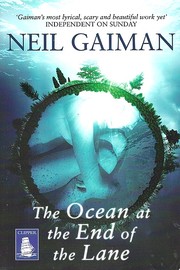
A middle-aged man returns to his childhood lane and remembers what he tried to forget.
Magical Realism · 2017
by Katherine Arden
In a snowbound medieval Russian village, a girl who can see the household spirits faces a new religion that wants them gone.
Contemporary Fantasy · 2013
by Helene Wecker
Two supernatural newcomers in 1899 New York try to pass as ordinary immigrants.
Contemporary Fantasy · 2018
by Madeline Miller
The witch of Greek myth gets her own voice, across centuries of exile and discovery.
Contemporary Fantasy · 2019
by Erin Morgenstern
A graduate student finds a mysterious book and, through it, a buried world of stories.
Contemporary Fantasy · 2019
by Alix E. Harrow
In the early twentieth century, a girl in a wealthy man's household finds a book about doors that open onto other worlds.
Contemporary Fantasy · 2020
by Susanna Clarke
A gentle man keeps a journal inside a house of endless halls, statues and tides.