

Cover image via Open Library, where available.
Urban FantasyContemporary Fantasy
Neverwhere
by Neil Gaiman · 1996
A London that runs on puns, and a second city hiding in its cracks.
Neverwhere imagines a hidden London that lives beneath the real one, made of people who have slipped out of ordinary notice. Its geography is built from the city's own place names, so Tube stops, bridges and districts turn into literal people, titles and dangers. A mild office worker gets pulled across the border and has to learn the rules of a place that does not care whether he is ready.
It reads like a fairy tale told by a dry, amused narrator. Chapters are short, the plot moves in a clear quest line, and the humor sits right next to genuine menace. The villains are memorable and a little grotesque, and the book is happy to be strange for the fun of it.
Where it sits in the genre
The story began as a BBC television serial developed with the comedian Lenny Henry, and the novel followed as Gaiman's first solo novel. It belongs to the strand of London fantasy that treats the city as a layered, haunted text, and it helped set the template for later hidden-city stories in urban and contemporary fantasy. Compared with the sprawling mythology of American Gods, this is lighter, tighter and more openly playful, which makes it an easy first Gaiman novel.
Voice and structure
The narrator of Neverwhere sounds like someone telling you a story across a table, pausing to explain a joke or to warn you that something unpleasant is coming. Sentences are plain and quick, and the humor often lands in the final clause. The book is organized as a quest in short chapters, with Richard Mayhew following the girl Door through a series of set pieces: a market, a hall of judgment, a dangerous descent. Because each stop has its own mood, the book feels episodic even though the line of the plot never really wavers.
Two hired villains, Croup and Vandemar, supply most of the menace and a good share of the comedy. Gaiman lets them be funny and frightening in the same paragraph, which is the trick the whole novel depends on.
Setting and magic
London Below is less a system than a joke that turned out to be true. Names from the Tube map become places, offices and creatures, so Earl's Court is a court with an actual earl and Knightsbridge is not a safe neighborhood. The book rewards anyone who knows the city, but it works for readers who do not, because the rule is easy to catch: if a name sounds like a pun, expect it to be literal.
Magic here is mostly inherited talent and bargaining. Door can open things, the Marquis de Carabas deals in favors, and nearly everything is paid for with debts, promises or the loss of a place in ordinary society. The cost that matters most is being unseen. People above simply stop noticing those who fall, and that blindness is what makes the underworld possible.
Themes in practice
The central theme is who counts as visible. In the opening chapters Richard performs a small act of kindness for a stranger and, almost at once, his flat, job and fiancée stop recognizing him. The consequences are shown through scenes of practical absurdity, such as a friend looking straight through him, not through speeches. Later the book returns to the same question from the other side, asking what the people below have gained by leaving.
Class is a quieter thread. London Below is the city's unregarded people turned into a court system, with its own aristocrats, merchants and outcasts. Gaiman uses it to make fun of rank and to take the poor seriously, usually in the same scene.
How it compares and who it suits
Next to American Gods, this is the shorter and friendlier Gaiman: one city, one quest, a brisk pace and no sprawling pantheon. If you want the same dry narrator in a lighter key, Anansi Boys is the closer match, since it also puts a flustered Londoner in over his head. For a hidden world that is built with more rules and far more length, A Darker Shade of Magic takes the London idea and makes it a travel network.
Neverwhere suits readers who want fairy-tale dread without a heavy time commitment, and anyone who enjoys wordplay as worldbuilding. It is a good first Gaiman novel and a good gift for someone who liked portal stories as a child. It is less satisfying if you want deep lore or a hero who becomes capable quickly. Richard stays reactive for most of the book, and some readers find that frustrating.
Reading the pun map
The central trick of Neverwhere is that a name on the Underground map becomes a literal thing below it. You do not need to know London to enjoy this, but you will enjoy it differently depending on how well you do. A reader who has ridden the Tube hears the joke before Gaiman spells it out. A reader who has not gets the same pleasure one beat later, when the explanation arrives in a dry aside from the narrator.
A practical tip: when a place name sounds odd, slow down for a sentence. The book plants its best jokes in half-sentences, and several of the strangest creatures and offices are simply a pun taken seriously. Skimming costs you the humor, and the humor is half of what makes the menace work.
Richard Mayhew as a deliberately ordinary lead
Richard is built to be the reader's stand-in, and the book is honest about what that means. He is polite, a little passive and slow to understand that his old life has closed behind him. For roughly the first half he asks questions, gets confused and is rescued. That is a design choice, not a flaw, because a competent hero would make London Below feel easy.
The payoff is that his small decisions carry weight. When he finally acts without being pushed, it lands because the book has been patient with him. If you have enjoyed other stories of ordinary people entering a hidden order, such as The Rook, notice the difference: Myfanwy there is thrown into competence, while Richard has to grow into it, and grows only partway.
Door, the Marquis and the question of who is driving
Richard is the viewpoint, but the quest belongs to Door, a young woman from a family of travelers who can open what is shut. She has a goal, a grudge and a short list of people she can trust. The Marquis de Carabas, a smooth dealer in favors, is the book's other motor, and his bargains are among its cleverest scenes. Both characters are sketched quickly and are more interesting for it.
This is worth knowing if you expect a romance. There is a gentle thread, but the book cares more about debt and loyalty than about longing. Door is never a prize for Richard to win. She is a person with her own errand, and the story treats her that way even when Richard's concerns take up more page space.
Croup and Vandemar and the comedy of dread
The two hired killers are the reason many readers remember this book decades on. One is a talker, florid and fussy. The other is a silent, enormous presence with a surprising appetite. Gaiman writes them as a double act, and the result is that you laugh and then feel slightly ill about laughing.
This balance is the book's signature, and it is worth comparing with how other authors handle it. Storm Front uses jokes to keep danger at arm's length. Neverwhere uses them to make danger more intimate. Expect a few scenes that are properly unpleasant, in the manner of a Grimm tale, with consequences that are physical and specific rather than abstract.
Where it sits among hidden-city stories
Neverwhere is a foundation stone for the modern habit of hiding a second city inside a real one. Midnight Riot takes the same London and runs it through a police procedure, with rules, jurisdictions and paperwork. A Darker Shade of Magic turns the idea into four parallel Londons joined by a travel system. Gaiman's version is the loosest of the three, which is its charm and its limit.
Think of it as the fairy-tale ancestor rather than the system-builder. It gives you a feeling, not a map. If your idea of a satisfying hidden world involves understanding how everything fits together, the others will serve you better. If you want to feel what it is like to fall out of a city's attention, this is the clearest version.
Is this the right Gaiman to start with?
For many readers, yes, with one condition. It suits you if you want a brisk, self-contained story and you enjoy British comic fantasy. It suits you less if you were hoping for the emotional weight of The Ocean at the End of the Lane or the mythic sweep of American Gods. Both are deeper, and neither is as quick to enjoy.
A simple test: read the opening chapter. If the narrator's dry tone and the sudden shift from office life to peril make you smile, you will likely finish happily. If the voice feels twee, nothing later in the book changes the register much, and you may do better elsewhere in his catalog.
Honest drawbacks and content notes
The plot is a clean quest, which means it can feel predictable if you have read many of them. Secondary characters are vivid but thin, and a few settings are visited so briefly that you may wish for a longer stay. The ending resolves the main line without trying to answer everything about how London Below works, which some readers find airy.
Content is moderate. There are a couple of gruesome moments, an implied threat to a young woman and some casual cruelty from the villains, all treated in the register of a dark fable. Nothing is graphic in the way later Gaiman novels can be, so it is among the safer picks for readers who want strangeness without heavy material.
How the book began and why it reads like a script
Neverwhere started life as a television serial, and the novel keeps some of that shape. Scenes are built around entrances and exits, chapters end on a hook, and locations are introduced with the economy of a set designer. Characters are drawn in a few strong strokes, with a distinctive way of speaking or dressing, so you can tell who is in a room without being told.
That heritage explains both the book's speed and its occasional thinness. Dialogue-heavy scenes move quickly, and the visual imagination is vivid, yet interior thought is often kept short. Readers who like prose that lingers inside a character's head may find it brisk to the point of slightness. Readers who enjoy a story that simply moves, with a distinct image on almost every page, will feel at home.
A short decision guide
- Choose it if you want one clear evening-or-weekend read with a beginning, middle and end.
- Choose it if you like fairy tales retold for adults, with some wit and some real teeth.
- Pick something else if you want a magic system you can reason about, or a hero who is competent from the start.
- Pick something else if you have already read several London-based hidden-world novels and want a new angle.
How it reads
- A secondary world built out of real London place names and wordplay
- A dry, storyteller narrator with a fable-like cadence
- Short chapters and a clear quest structure
- Humor and dread balanced in the same scenes
- An ordinary protagonist who is slow to become capable
Read it if
- You like portal stories where the portal is a city, not a wardrobe
- You want a quick, atmospheric entry to Gaiman
- You enjoy British humor mixed with fairy-tale darkness
Maybe skip it if
- You want dense, rule-heavy worldbuilding
- You dislike a protagonist who spends much of the book out of his depth
Who it is for
Suits adult and older teen readers who like quirky, atmospheric fantasy. Contains some violence and a few unsettling villains, with a light romantic thread.
Reading notes
A true standalone, and the best place to begin with the author if you prefer short, story-driven books.
Themes and tropes
Hidden WorldsBelonging and OutsidersMyth and FolklorePortal FantasyReluctant Hero
If you like this, try
Midnight Riot (Rivers of London)
by Ben Aaronovitch
Also treats London as a living, layered place full of hidden rules, though with a police-procedural frame.
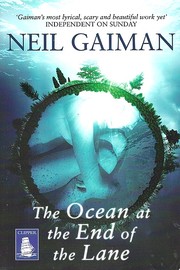
The Ocean at the End of the Lane
by Neil Gaiman
Shares Gaiman's fable voice, in a quieter and more personal register.
The Rook
by Daniel O'Malley
Another story of an ordinary person discovering a secret, bureaucratic magical Britain.


More by Neil Gaiman

Contemporary Fantasy · 2001
American Gods
by Neil Gaiman
A road novel about old gods stranded in a country that stopped believing in them.

Contemporary Fantasy · 2005
Anansi Boys
by Neil Gaiman
A comedy of embarrassed sons, trickster gods and a family inheritance nobody asked for.
Magical Realism · 2013
The Ocean at the End of the Lane
by Neil Gaiman
A middle-aged man returns to his childhood lane and remembers what he tried to forget.