

Cover image via Open Library, where available.
Contemporary FantasyUrban Fantasy
American Gods
by Neil Gaiman · 2001
A road novel about old gods stranded in a country that stopped believing in them.
American Gods follows a man released from prison who takes a job as bodyguard and driver to a charming, evasive stranger. The route that follows crosses the American interior and gradually reveals that gods brought by immigrants over the centuries are still living there, scraping by or planning a fight against newer deities of media and technology.
Structure is loose and episodic. The main thread is interrupted by short 'Coming to America' interludes that trace how different peoples carried their beliefs across the ocean. The pace is deliberate, and the book values mood, landscape and small-town oddity as much as plot.
Where it sits in the genre
Published in 2001, it became one of the defining modern novels about myth surviving in a secular, commercial society, and it won both the Hugo and the Nebula for Best Novel. It sits where road fiction, Americana and mythology overlap, and many later contemporary fantasies about immigrant folklore owe it a debt. Readers who like it often find Anansi Boys a lighter companion, set in the same wider world of gods in the modern age.
Voice and structure
Gaiman writes American Gods in a calm, observant third person that sits close to Shadow Moon without ever hurrying him. Shadow is big, quiet and patient, and the prose takes on his habit of watching. Scenes are often long conversations in motels, diners and roadside attractions, where an odd stranger says something that sounds like a joke and turns out to be a warning.
The structure is a road trip with detours. Between chapters sit short pieces called Coming to America, which follow a person or a people who carried a god across the ocean and, in each case, what happened to the belief afterward. These can be read almost as stand-alone stories. They widen the book from one man's trouble into a portrait of a country built by arrivals, and they are where the novel is most openly lyrical.
Setting and magic
The setting is the American interior, treated as a landscape of roadside attractions and small towns that feel half asleep. Gaiman is interested in places that people travel to for strange reasons, and the book repeatedly turns a tourist stop into something sacred. One town in the upper Midwest, where Shadow stays for a long stretch, is drawn with enough care to feel like a character of its own.
The magic runs on belief and attention. Gods are powerful when they are worshipped and shabby when they are not, so the older ones live in cheap rooms and work odd jobs, while newer figures tied to media and technology carry a glossy confidence. Power is paid for in sacrifice and in the way a god has to be fed, flattered or remembered. Small human magic, like coin tricks and confidence games, sits next to it and is treated as the same family of craft.
Themes in practice
The book asks what happens to a faith when its believers move. Rather than lecturing, it shows the answer in scenes: a deity running a funeral parlor, another doing con work, a goddess who has adapted by changing what she offers. The immigrant interludes make the point in miniature, because each is a different version of loss and compromise.
Shadow's own thread is about grief and about choosing a side without enough information. Early on he is released from prison into a death that rearranges his life, and the novel keeps testing whether a man with nothing left can still be loyal to anything. The answer unfolds slowly, so patience is part of the contract.
How it compares and who it suits
Neverwhere covers some of the same ground in a smaller, funnier way, and it is the better pick if American Gods feels like a lot of book. Anansi Boys shares the premise of gods in the modern world but trades the elegy for comedy. For another take on old powers surviving in a commercial present, Kafka on the Shore works with myth in a very different, more dreamlike register.
The novel suits readers who like atmosphere, road fiction and mythology, and who do not mind a plot that takes its time to show its shape. It includes violence, some explicit sexual content and heavy themes, so it is for adults. Readers who want fast plotting or a tidy explanation for every mystery may find the middle stretch slow.
How to approach the length
American Gods is long and moves in an unhurried way, so the best reading strategy is to decide early what you want from it. If you read for plot, the middle section will test you, because Shadow spends a long stretch in one small town and the larger conflict recedes. If you read for place, mood and conversation, that stretch is where the book is most alive.
Many readers do well by treating it as a set of linked episodes. Stop at the end of a chapter, let a scene settle and pick it up the next day. The interludes help here. They are short, self-contained and a good place to pause, and they remind you that the novel is as much a collection of portraits as a single storyline.
Shadow Moon as a blank that fills in
Shadow is an unusual lead for a fantasy. He is physically imposing, emotionally quiet and mostly reactive, and he has just come out of prison with a loss waiting for him. Gaiman keeps his interior thin on purpose, so that the reader fills the gaps and the people around him can project onto him.
This can frustrate readers who want a protagonist with firm opinions. It pays off in the way minor characters open up to him. Con men, ghosts, gods and diner waitresses all tell him more than they should. If you like leads who listen, as in the investigators of Midnight Riot or the observers of other quiet novels, this approach will feel familiar. If you prefer an active hero, The Way of Kings offers a very different model.
Old gods, new gods and what the book is really arguing
The framing conflict pits older, immigrant deities against new ones tied to media, technology and attention. It is easy to read this as a simple old-versus-new fight, and the book encourages the idea early on. Over time it complicates it. Both sides turn out to be hungry for the same thing, and neither is especially kind to the people who feed them.
That complication is the real argument. Belief in this novel is a resource, and anything that runs on it behaves like an institution: it markets itself, it recruits and it protects its income. Seen that way, the sequence of cons, rallies and deals is not decoration. It is how the book thinks about faith in a country that sells everything.
A map of the Americana
Part of the book's lasting appeal is that it works as a strange travel guide. Roadside attractions, a carousel, a small lakeside town and a handful of motels all serve as sacred places for reasons the book slowly explains. You do not need to know the geography, but a reader who has driven through the Midwest will catch a lot of texture.
This puts it in the company of road fiction as much as fantasy. If you like that angle, pair it with The Library at Mount Char, which shares the rural-America setting and a hidden god-like order, but treats violence far more openly. Together they show two ways to write about divinity hiding in the plain places of the country.
Choosing your edition and your companions
Two text versions circulate, and the longer author's preferred text is the one many readers pick up now. Either gives you a complete story. If you are unsure, start with whichever is cheaper at your library, because the difference will not decide whether you like the book.
For companions, Anansi Boys is the natural comic follow-up and can be read before or after. If you want something shorter that tests whether you enjoy the author's voice, Neverwhere is the quick sampler. Keep in mind that the characters overlap lightly across these books, but none requires the others to make sense.
What the book does not do
Some readers arrive expecting a big final battle and a tidy explanation of how gods work. The book is less interested in either. Its big set pieces are quiet, its rules are suggested rather than listed, and the final stretch values revelation over spectacle. If you want a war told in detail, you will find the weight on conversation and conspiracy instead.
It also does not offer a hopeful, communal portrait of belief. Its gods are often petty, tired or cruel, and its human characters are mostly drifting. The warmth comes from small kindnesses and a few vivid supporting figures, not from any grand reassurance. Going in knowing this makes the slower passages easier to enjoy.
Content notes in plain terms
The book contains graphic violence, several explicit sexual scenes, including a supernatural encounter that some readers will find uncomfortable, and a recurring focus on death. There is also a long section involving a suspicious small-town mystery, which carries a dark undercurrent but not gore.
If you are sensitive to any of these, check your tolerance against a sample chapter before committing. It is not a book that eases you in, and some of its harder passages arrive early. Readers who want the same mythic premise with less intensity will be better served by the comic register of Anansi Boys.
The interludes as the book's secret center
Many readers talk about the plot and forget that the shortest chapters may be the best. Each interlude follows a person or a people crossing the ocean with a belief packed in among their belongings, and each ends in some form of loss. A reader who skips them will still follow the story, but will miss the book's argument.
They also vary the texture. After a long chapter of motel rooms and quiet talk, a ten-page tale set centuries ago works like a window opened in a stuffy room. If you are reading in short sessions, treat each one as a complete story in itself. They can be remembered separately, and several are good enough to be read aloud.
Why it keeps being recommended, and to whom
The novel is a standard recommendation for readers moving from general fiction into fantasy because it feels like a literary road novel first. It asks nothing of you in terms of genre knowledge. Mythology is explained through conversation, and you can enjoy it without recognizing a single god in advance.
It is a weaker recommendation for readers who have just finished something fast and plot-forward, such as Storm Front. The change in pace can feel like a drop. A better approach is to come to it when you want to be immersed in mood, ideally with a free week and no hurry.
How it reads
- A cross-country road structure that doubles as a tour of American places
- Gods drawn from many cultures, shown as tired, funny or dangerous people
- Interlude chapters that widen the book beyond its main character
- A quiet, observant lead who often watches more than he acts
- Mystery that unfolds slowly and rewards patience
Read it if
- You are drawn to mythology set in everyday modern places
- You like long, meandering novels where atmosphere matters
- You enjoy stories about belief, immigration and cultural memory
Maybe skip it if
- You want a fast, tightly plotted adventure
- You prefer to avoid graphic violence or frank sexual content
Who it is for
Best for adult readers. Includes violence, sexual scenes and heavy themes of death, so it is not a gentle read.
Reading notes
Works on its own. The longer author's preferred text is widely available, but any standard edition is a complete story.
Themes and tropes
Myth and FolkloreHidden WorldsBelonging and OutsidersIdentity and TransformationSecret SocietyMystery Plot
If you like this, try
Anansi Boys
by Neil Gaiman
Shares the premise of gods living among us, but swaps the road-trip gravity for family comedy.
The Library at Mount Char
by Scott Hawkins
Another modern story where godlike figures hide in rural America, told with far more brutality.
Kafka on the Shore
by Haruki Murakami
Pairs a drifting, dreamlike structure with myth intruding on ordinary lives.
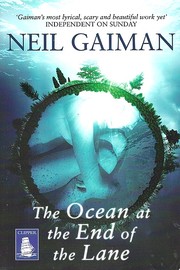
The Ocean at the End of the Lane
by Neil Gaiman
A much shorter and more intimate look at old powers in a plain setting.


More by Neil Gaiman

Urban Fantasy · 1996
Neverwhere
by Neil Gaiman
A London that runs on puns, and a second city hiding in its cracks.
Contemporary Fantasy · 2005
Anansi Boys
by Neil Gaiman
A comedy of embarrassed sons, trickster gods and a family inheritance nobody asked for.
Magical Realism · 2013
The Ocean at the End of the Lane
by Neil Gaiman
A middle-aged man returns to his childhood lane and remembers what he tried to forget.