Urban Fantasy · 1996
Neverwhere
by Neil Gaiman
A London that runs on puns, and a second city hiding in its cracks.
Reading guide · 23 min read
Contemporary fantasy is fantasy set in the world we know, or close to it, with magic arriving as a secret, an intrusion or a quiet fact of life. This guide gives a working definition, tests it on real books, clears up common misunderstandings and points you to a first read that fits your taste.
Contemporary fantasy puts magic or the supernatural inside a setting readers already recognize: present-day cities, ordinary houses, schools, offices and roads. The fantastic is the exception, the secret or the pressure at the edge of the frame, not the whole map. You do not have to learn an invented geography or a political history before the story starts, because the baseline is the world you woke up in.
Publishers, retailers and libraries use the term loosely, and some shelve anything with a modern setting under it. We use it more narrowly. The real world is the default, and magic is a disruption, a hidden layer or a gentle force acting on it. Neverwhere is a tidy illustration: an ordinary man in ordinary London helps an injured stranger and finds that a second city exists below the first, invisible to almost everyone above.
That definition is a starting point, not a fence. Plenty of good books sit near the line, and part of the pleasure of the genre is watching authors push on it. The sections below give you three questions to ask of any book, four common ways the real world and the magical meet, and a short checklist you can run on a copy you already own.
First, where does the story begin? In contemporary fantasy the opening pages usually feel like our world, with recognizable streets, jobs, weather and daily routines. In epic fantasy the opening pages establish a map. If you could mistake the first chapter for literary fiction, you are probably in the right territory.
Second, what is the status of magic? Ask whether most people know about it. If magic is hidden, rare, misunderstood or disbelieved, the book leans contemporary. If magic is publicly known and organized into guilds, courts and police forces, the book leans toward urban fantasy or toward an invented world. This question matters more than the date on the calendar, because the genre is defined by the contract with the reader about what counts as normal.
Third, what drives the plot? Contemporary fantasy tends to be driven by a character's relationship to the strange, such as memory, grief, belonging or curiosity. Urban fantasy tends to be driven by cases, factions and escalating threats. Few books are pure on this axis, but the center of gravity is usually visible within the first fifty pages.
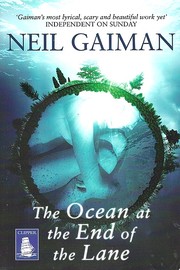
Because the setting is familiar, the genre leans on voice, mood and theme. Many contemporary fantasies are quieter than their urban cousins and more concerned with what magic means to a person than with how it works. The Ocean at the End of the Lane is short, and it carries its weight in childhood memory and the gap between what a child sees and what adults admit. It reads in an afternoon and stays with you much longer.
Prose style matters here more than in many genres. The best-loved books often have an unmistakable narrator, whether that is the formal, footnoted wit of Jonathan Strange & Mr Norrell or the plain, diary-like candor of Piranesi. If you are drawn to fantasy because of sentences rather than systems, this is a good neighborhood to explore.
Pacing is usually unhurried. Expect long stretches of atmosphere, conversation and observation between the big moments. Readers who come from fast, plot-heavy series sometimes read this as slowness, and readers who come from literary fiction often read it as relief. Neither reaction is wrong, and knowing which one is yours saves a lot of false starts.
The hidden layer. Magic exists beside ordinary life and most people never notice. Neverwhere is the textbook case, and American Gods extends the idea across a whole continent, where old gods survive in motels, roadside attractions and small towns. The pleasure is discovery: you walk past a place every day and learn what else has been standing there.
The intrusion. A single strange force breaks into a life that was otherwise realistic. In The Ocean at the End of the Lane, an adult returns to his childhood neighborhood and remembers a farm at the end of a lane where the rules were different. The story is small in scale, and the magic is the lens through which a very human memory comes into focus.
The fold. The book is set in a place that is not quite ours but is anchored by a realistic frame. Piranesi unfolds in a house of endless halls, tides and statues, narrated by a man who finds the place entirely natural. The fantasy is total inside the house, yet the book is still shelved as contemporary because the house exists in relation to our world and the story slowly makes that relation clear. How that happens is better discovered than described.
The past with a secret. Some contemporary fantasies are set in earlier periods but follow the same contract: our history, plus magic as a hidden or half-forgotten art. The Night Circus is set in the late nineteenth century, and The Golem and the Jinni places two mythic beings in the immigrant neighborhoods of New York in 1899. We include such books because readers who love one tend to love the other, whatever the calendar says.
Comparing three catalog books shows how much variety the label holds. Neverwhere is an adventure with a clear structure: a quest through a hidden city, with strange allies, a menacing pair of villains and a goal. The tone is wry, the pace is steady, and the underlying idea is that people who fall through society's cracks become literally invisible.
The Ocean at the End of the Lane shares the author and the broad contract, but almost everything else changes. It is short, intimate and mostly set in a single place. The threat is domestic and mythic at once, and the emotional payoff is about how we remember being small. It is not a quest; it is a recollection.
The Magicians takes yet another route. It begins with an unhappy young man in modern New York who discovers a real college of magic, and it uses that premise to argue with the fantasy novels he grew up loving. The magic is more procedural, the humor is sharper and the tone is much harsher about what wish fulfillment costs. It shows that contemporary fantasy can be critical of the genre it belongs to.
Put side by side, the three books share a recognizable starting world and little else. One is a quest, one is a memory, one is a critique. If someone tells you they dislike contemporary fantasy because it is too slow, ask which of these they tried, because the label covers some readers' favorite experiences and others' least favorite.
The Invisible Life of Addie LaRue is a good test of how far the label bends. It begins with a young woman in eighteenth-century France who makes a bargain that leaves her forgotten by everyone she meets, then follows her across centuries to modern New York. Most of its scenes are in places you could visit, and the magic is a single curse rather than a system. That is why it sits comfortably here despite its historical sweep.
The Starless Sea starts in the present day with a graduate student who finds a strange book in a library, and it moves into a buried world of stories and doors. It is a book about books, built from nested tales, and it suits readers who like puzzle-box structure more than plot momentum. Little, Big, first published in 1981, is older and slower: a sprawling family saga about a house in the countryside and the fairy folk who live at its edges. It is demanding and beautiful, and it shows that the genre had a long tradition before the current wave.
Reading these three alongside Neverwhere or Piranesi teaches you what you actually respond to. If Addie LaRue is your favorite, you probably like emotional stakes and a clear central relationship. If The Starless Sea is, you like structure and atmosphere. If Little, Big wins, you are comfortable with prose that takes its time and trusts you to follow.
Marketing categories are not consistent. A bookstore may place a book under fantasy, literary fiction, romance or horror depending on the edition, and the same title can move between shelves from one printing to the next. Use the label as a hint, not a rule. The better signals are the first page, the narrator's voice and what reviewers say about pace.
A useful habit is to read the first ten pages of a sample before buying. Contemporary fantasy shows its hand early because voice is the main product. If those pages feel flat to you, a glowing review is unlikely to change that. If they pull you along, you can ignore the genre label entirely and keep reading.
The closest neighbor is urban fantasy, and the boundary is a matter of emphasis. Urban fantasy tends to be faster, more serial and more focused on a protagonist who works cases within a known supernatural society. We cover the difference in detail in Urban fantasy vs contemporary fantasy. Many books, including Neverwhere, can be read under either label, and nothing is lost by following your taste instead of the shelf.
The farthest neighbor is epic fantasy, which builds a fully invented world and often a long timeline. Readers sometimes move between the two in both directions, for instance from a standalone like Piranesi toward the more elaborate worldbuilding of the epic fantasy shelf. Dark fantasy and romantic fantasy overlap with contemporary fantasy at the edges whenever a modern setting meets a gothic or romantic mood. Our magical realism page covers the other close cousin.
Open to the first chapter of any book and spend five minutes on this list. It will not give a verdict, but it will tell you how the book is likely to behave.
Readers who thrive here usually share a few habits. They enjoy atmosphere for its own sake, they do not need every question answered, and they like it when a story trusts them to notice details. They often read widely outside fantasy and appreciate it when a fantasy novel borrows the methods of literary fiction: an unreliable memory, a restrained narrator, a theme that is allowed to stay a little unresolved.
Readers who bounce usually want something the genre does not promise. If you want a magic system you can predict, a map to study or battles that change the political order, you will probably find these books under-furnished. If you want a fast case-of-the-week structure with a recurring cast, you may prefer urban fantasy. That is not a failing of either side. It is simply a mismatch between appetite and offer.
There is also a middle group who like the genre in small doses. They read one quiet, strange novel a season and enjoy the contrast with their usual diet. If that sounds like you, the short books in this guide are the most useful, because they ask for a weekend rather than a month. A short book that does not land costs you little, and one that does can change what you pick up next.
A last practical note on content. Contemporary fantasy ranges from gentle to unsettling, and the real-world setting can make the dark moments feel closer. Several of the books above deal with loss, fear or cruelty in ways that are quiet rather than graphic. Each work page in the catalog lists content notes in general terms, so check there if you are choosing for someone else.
If you want a gentle, short introduction with strong atmosphere, start with The Ocean at the End of the Lane. If you want a mystery of place and perception, read Piranesi, which is also short and which rewards a second reading. If you enjoy an immersive, beautiful setting with a love story at its center, The Night Circus is built for that appetite.
If you prefer an adventure with humor, begin with Neverwhere. If you want myth and family stories that wander across a map of American places, try American Gods, which is long and strange and not a good first book for impatient readers. If you want something modern, sardonic and a little cruel to its own genre, pick up The Magicians.
If your taste is for history and immigrant stories with a mythic edge, The Golem and the Jinni is the clearest path. It is longer than the others and builds slowly, but its two leads are easy to care about from the first chapters.
Once you have read two or three of these, the best next step is to map your preferences. If you liked the speed and the mystery, move toward urban fantasy using our guide to the difference between the two. If you liked the sentences and the strangeness, explore magical realism for fantasy readers. If you liked the idea of rules and costs, the magic systems page will help you find books that handle them well.
You can also follow a prepared sequence. Our Start with Contemporary Fantasy path orders a handful of catalog books from gentlest to most demanding, so you can build a taste without committing to a long series. Whatever you pick first, give it fifty pages. Contemporary fantasy often pays off in voice before it pays off in plot, and that early patience is the best investment the genre asks of you.
Fantasy set in the everyday world is much older than the label. Ghost stories, fairy tales told as if they happened down the road, and Victorian tales of hauntings and bargains all share the contract that the modern genre inherited: ordinary life, then a crack. What changed in the late twentieth century was that writers began treating that crack as the main subject instead of a brief shock before the ending. Books like Little, Big showed that a family saga could be a fantasy without a single map, and that the strangeness could accumulate slowly over generations.
A second strand came from outside the English-language tradition. Novels such as Like Water for Chocolate and Kafka on the Shore reached English readers in translation and taught many of them that the supernatural can sit in a kitchen or a library without anyone explaining it. Those books are often filed under magical realism, but their influence on how English-language contemporary fantasy sounds is hard to miss, especially in its calm acceptance of the impossible.
The third strand is commercial and structural. Through the 1990s and 2000s, books like Neverwhere and Jonathan Strange & Mr Norrell reached large general audiences, which made it easier for publishers to take chances on similar work. Later novels, including The Night Circus and Piranesi, widened the readership further. The result is a genre with no single house style, which is why a definition built on questions works better than one built on a list of ingredients.
In epic fantasy, a reader learns the world through maps, histories and invented terms. In contemporary fantasy the same job is done by place, and the places tend to fall into a handful of families. There is the city with a second city under or inside it, which is the shape of Neverwhere. There is the house, estate or shoreline that holds a secret, which is the shape of The Ocean at the End of the Lane. There is the building that turns out to be larger than any building could be, which is the shape of Piranesi.
Knowing which family a book belongs to tells you a good deal about its pace and its mood. City books move, because cities offer crowds, strangers and chance encounters. House books circle, because a house is a closed space where the same rooms and the same people come around again. Infinite-building books tend to be solitary and meditative, since the architecture itself becomes the character. None of these is better than the others, but a reader who loves one family may find another oddly stuffy or oddly restless.
Libraries and bookshops deserve their own note, because they appear so often that they have become a small tradition. The Starless Sea and The Library at Mount Char both use a collection of books as the doorway to something larger, though they could hardly feel more different. One is wistful and romantic, the other is violent, strange and darkly funny. If this motif appeals, our page on the books and libraries theme gathers more titles built around it.
The craft problem in this genre is that the realistic frame has to survive contact with the impossible. If the opening chapters feel like a thin sketch of a real place, the magic has nothing to push against and the effect is lost. The better books spend real effort on mundane texture: the way a commute feels, how an office smells, what people say when they are trying to be polite. That grounding is the reason a single strange detail can land so hard.
A common technique is the matter-of-fact narrator. The voice reports the impossible in the same tone it uses for the weather, and the reader takes cues from that calm. Piranesi is the extreme case, because its narrator has built an entire practice of daily routines around a hall of statues and tides. A different technique is the skeptical protagonist, who says what the reader is thinking and then gets overruled by events. The Magicians leans on that approach, and so do many urban fantasy novels.
A third technique is restraint about explanation. The author shows a consequence without naming the mechanism, and trusts the reader to feel the unseen rules by their effects. Done well, this is persuasive, because the reader supplies a logic of their own. Done badly, it reads as vagueness. If a book keeps hinting at an answer it never intends to give, ask yourself whether the withholding is serving the mood or just postponing the work.
Because the setting is familiar, the genre often uses magic as a way to talk about experiences that are hard to describe directly. Loss is the clearest example. A strange event becomes a container for what it feels like to forget, to be forgotten, or to lose someone. The Invisible Life of Addie LaRue turns that idea into its premise, since its heroine is remembered by no one she meets. Our memory and loss page follows the thread through other books.
Belonging is the second constant. Many protagonists begin as outsiders in their own lives, such as the lonely child, the unhappy graduate or the immigrant in a new city, and the fantastic gives them a place that fits. The Golem and the Jinni makes that explicit by placing two uncanny beings among the immigrant neighborhoods of early twentieth-century New York. Their strangeness is magical, but the loneliness is familiar to anyone who has moved somewhere new.
These themes help explain why the genre has such a loyal following among readers who do not think of themselves as fantasy readers. The magic is a metaphor you can feel without decoding. If you want a deeper look at one of these threads, the grief and healing page is a good second stop.
The first mistake is expecting a plot machine. A reader who picks up a quiet contemporary fantasy hoping for rising stakes and a boss fight may decide the book is slow, when the book was never promising that pleasure. Match your expectations to the book's own opening pages, and you will rarely be disappointed in the wrong way.
The second mistake is reading the genre as a puzzle with a hidden answer key. Some books do hold a clean solution, but many treat ambiguity as part of the point. If you spend a whole novel waiting to learn what the magic really is, you may miss what the book was offering instead. Try reading once for atmosphere before you decide whether you want to reread for structure.
The third mistake is assuming that one disappointing title rules out the whole shelf. The label covers cozy comfort reads, bleak fables and sprawling literary experiments. A reader who bounced off the length and density of Jonathan Strange & Mr Norrell may still love the compact Piranesi, which comes from the same author and feels like a different instrument entirely.
If you are new to the genre and want a structured trial, choose three books that differ on purpose. Start with The Ocean at the End of the Lane, because it is short, contained and tonally clear, and it will tell you quickly whether the quiet, memory-soaked side of the genre suits you. Give it an evening or two, and write down in a sentence what you liked and what you would change.
Next, pick something with more motion. Neverwhere is a good choice, since it keeps the realistic frame but moves briskly through a series of set pieces. If that works, you have learned you enjoy adventure with a fable's edge. If it does not, you have learned the opposite, and your third book should lean toward voice and atmosphere instead.
For the third book, take a risk. The Night Circus, Piranesi or The Golem and the Jinni each push the genre in a different direction: spectacle, solitude or history. After that month you will have a map of your own taste, which beats any recommendation list. Our Start with Contemporary Fantasy path lays out a similar sequence step by step if you prefer someone else's plan.
Readers sometimes assume that a quiet book is a gentle one. It is worth checking. Several of the best-known titles deal with loss, fear, cruelty or isolation, and they do so with a lightness of touch that can catch you off guard. The Ocean at the End of the Lane is told from a child's point of view but is not a children's story, and it contains genuinely frightening moments.
If you are choosing for a younger reader or for yourself on a difficult week, look at reviews that describe tone in plain terms, and sample the first chapter. Our book pages list tone tags and short audience notes, and they mention content in general terms without spoiling plots. A few minutes spent there is a better filter than a genre label.
A useful way to place the genre is to see what it borrows. From the ghost story it takes dread and the sense that the past presses on the present. From literary fiction it takes interest in interior life and a willingness to leave questions open. From the fairy tale it takes bargains, thresholds and the plain, formal rhythm of a told story. Readers who already love one of those traditions can often find a doorway in by following that thread.
Crime and mystery readers will find that Addie LaRue and The Starless Sea reward close attention to clues, even though neither is a whodunit. Historical fiction readers will find that The Golem and the Jinni and Jonathan Strange & Mr Norrell take period detail seriously. Readers of science fiction may enjoy the way The Magicians treats its premise as a system to be tested. Starting from a neighboring genre you already trust lowers the risk of a first purchase and makes the strangeness easier to absorb.
Under the definition we use, yes, in a loose way. It starts in a recognizable present-day Britain, hides a magical society inside it and follows a young protagonist into that hidden world. It also shares features with children's fantasy and magic-school stories, so many readers file it separately. The category is a tool for finding books, not a rule about what a book is allowed to be.
No. Many fans of literary fiction, historical novels and ghost stories find this the most welcoming part of fantasy, because the opening pages feel familiar and the invented material arrives slowly. If you usually avoid maps and invented languages, this is the shelf to try first.
They overlap, but they are not the same. Magical realism usually treats the supernatural as an accepted part of reality and often carries social or political meaning from a particular cultural tradition. Contemporary fantasy more often lets the reader and the characters register the magic as magic. Our guide to magical realism for fantasy readers covers the border in more detail.
Partly it reflects the publishing market, which has favored English-language writers and settings. But the genre is not limited to them, and translated or internationally set books such as Kafka on the Shore and Like Water for Chocolate show how differently the contract can be written. If you want variety of place, look beyond the first screen of results.
Usually it does not matter. Most of the authors in this genre write mainly standalone books, and each one is built to be read alone. The exceptions are the series, such as The Magicians, where the order matters. Check the series note on each book page before you buy.
Then lean toward the books with firm structure, such as The Night Circus or The Golem and the Jinni, which resolve their central questions even if the magic stays mysterious. Or read across into urban fantasy, where explanation is part of the pleasure. It is a matter of taste, not of being a worse reader.
Yes. Neverwhere has a dry wit, The Magicians is often sharply satirical, and several urban fantasy novels depend on banter. Humor and wonder go together more easily than people expect, since both rely on surprise.
About fifty pages is a reasonable trial for most titles in this genre. The first chapters should show you the voice and the contract. If neither pulls you in by then, you are unlikely to be won over later, and moving on is a sound choice.
You now have a definition, a set of tests and a month-long plan. The next step is to move from reading about the genre to reading in it. Browse the full contemporary fantasy page to see the whole shelf, grouped by tone and approach, and check the neighboring magical realism page if the quieter books are calling you.
If you find yourself wanting more pace, read our comparison of urban fantasy and contemporary fantasy and try a series. If you want more atmosphere, the character-driven fantasy path is a natural continuation. And if you simply want to follow one author, start with the Gaiman or Clarke pages and read outward from there.
Urban Fantasy · 1996
by Neil Gaiman
A London that runs on puns, and a second city hiding in its cracks.
Magical Realism · 2013
by Neil Gaiman
A middle-aged man returns to his childhood lane and remembers what he tried to forget.
Contemporary Fantasy · 2020
by Susanna Clarke
A gentle man keeps a journal inside a house of endless halls, statues and tides.
Magical Realism · 2011
by Erin Morgenstern
A black-and-white circus that opens at dusk is also the arena of a hidden contest.
Contemporary Fantasy · 2009
by Lev Grossman
What happens when a fantasy-obsessed teenager gets everything he wished for, and it is not enough?
Contemporary Fantasy · 2013
by Helene Wecker
Two supernatural newcomers in 1899 New York try to pass as ordinary immigrants.