Magical Realism · 1992
Like Water for Chocolate
by Laura Esquivel
Recipes, family duty and forbidden love in revolutionary-era Mexico, where feelings seep into food.
Reading guide · 22 min read
If you read fantasy for the strangeness, magical realism offers a related pleasure with different rules. This guide explains the mode, compares named books on the border, and gives you practical tests so you can approach it without frustration.
Magical realism presents impossible events as part of an otherwise realistic world, without surprise or explanation. A ghost may sit at the dinner table, or a character's grief may change the weather over a house, and the story simply moves on. The people in the book treat the marvelous as ordinary, and the narrator does too. That deadpan tone is the signature of the mode.
The term comes from art criticism in the 1920s, and it was later applied to Latin American fiction. The Cuban writer Alejo Carpentier argued in a famous 1949 preface for a marvelous reality rooted in the region's history. Gabriel Garcia Marquez's One Hundred Years of Solitude, published in Spanish in 1967, brought the mode to a worldwide audience. Writers from many countries have used it since, including Isabel Allende, Salman Rushdie, Haruki Murakami and many others.
Like Water for Chocolate is a good compact example. Laura Esquivel published it in Spanish in 1989, and an English translation appeared in 1992. A young woman's feelings pass into the food she cooks, and the novel treats that as a natural fact of family life during the Mexican Revolution. It is structured in monthly sections, each opening with a recipe, which makes it easy to read in short sessions.
Fantasy usually builds a system, a society or a quest around its magic. Characters study it, fight about it, hide it or inherit it. Magical realism rarely does. The marvelous is a feature of experience, and the interest lies in what it reveals about people, culture, politics and memory.
A short comparison can help. In a fantasy novel, if a ghost appears, someone asks what it wants, who can see it and how it can be dealt with. In magical realism, someone offers it a chair. The first treats the impossible as a problem to be solved. The second treats it as part of the room.
That difference affects pacing. Plot may be loose, time may loop, and chapters may read like linked stories. Fantasy readers who expect a clear arc sometimes find this frustrating. Reading it as a mood or a sequence of images, not as a puzzle, helps a great deal.
It is not just fantasy with fancier prose. The difference is in how the book handles its own impossibilities, and some magical realist novels are plainly written. What matters is whether the narrator keeps a straight face.
It is not only Latin American. The tradition is closely associated with that region, and many writers from elsewhere use the mode in their own ways, so do not assume a book is derivative because it shares the label.
It is not low on plot. Many magical realist novels have strong stories. The plot simply may not be organized around a mystery to solve or an enemy to defeat. Characters may want ordinary things, such as love, land or belonging, and the marvelous colors those wants.
Some novels sit between the two traditions. The Golem and the Jinni by Helene Wecker (2013) follows two supernatural beings in New York in 1899, one made of clay and the other of fire. Its magic is real and its premise is clearly fantasy, yet it handles immigrant neighborhoods and the problem of belonging with the weight of literary fiction. It has a plot with clear momentum, so it is an easy first step.
Little, Big by John Crowley (1981) is a multigenerational story about a family connected to Faerie, with dense, poetic prose. It rewards patient reading and is often described as a classic of the American fantastic. The fairies never arrive in a spectacular way; they hover at the edges of ordinary family life, which is precisely why it belongs near this border.
Kafka on the Shore by Haruki Murakami was published in Japanese in 2002, and its English translation appeared in 2005. It mixes realism with dream logic, with a teenage runaway on one thread and an older man who talks to cats on the other. Nobody explains why this happens, and the reader is not meant to demand it.
Piranesi by Susanna Clarke (2020) is much shorter than her first novel and sits closer to fantasy, since its setting is a vast house with tides and statues. Its narrator accepts every wonder as plain fact, which is the magical realist habit applied to a secondary world. It won the Women's Prize for Fiction in 2021 and works well as a short test of whether you enjoy the mode.
Set The Golem and the Jinni beside Kafka on the Shore and you can see the spectrum. The first explains its beings: we are told what a golem is, what a jinni is and how each ended up in the city. The plot tightens as their paths cross. The second explains nothing and lets its images accumulate. A fantasy reader who likes rules will be comfortable in the first. A reader who likes mystery without answers will prefer the second.
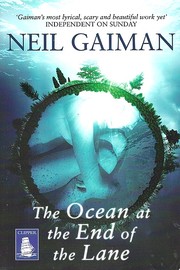
Now add The Ocean at the End of the Lane by Neil Gaiman (2013). It is a short novel in which a man returns to the place of a childhood memory, and it keeps its supernatural elements fairly clear while retaining a dreamlike frame. It sits between the two: a plot fantasy readers can follow, with the emotional register of memory. It is an excellent stepping-stone.
If you appreciate wonder, atmosphere and fairy-tale logic, magical realism offers a concentrated dose. It often asks questions about memory, belonging and loss, themes also found in fantasy. Our memory and loss theme page connects books across genres.
It can also teach a new way of reading. Instead of asking how magic works, you ask what it means. That shift can change how you approach even conventional fantasy, and many readers report that after trying it they notice symbolic layers in familiar books that they previously read for plot alone.
Without a magic system, there can be fewer clear rules and less explicit plot. Endings may be open. If you value clear world-building or genre pacing, expect an adjustment. Short novels are a good test, because they are not a large investment.
You may also find that the emotional temperature is different. Magical realism often deals with family, politics and history, with humor and sorrow side by side. If you read fantasy to escape, some of these books will feel closer to real life than you expect, since the marvelous is there to illuminate the real, not to replace it.
If you want to test the waters, try three books in order: a short and sensory one, a fantasy-adjacent one with a clear plot, and a dreamlike one that asks more of you. For most readers that means Like Water for Chocolate, then The Golem and the Jinni, then Kafka on the Shore. That progression lets you adjust your expectations gradually.
If you enjoy the first two, the third will feel like a natural step, and if you do not, you will have learned a lot about your taste in a few weeks. Readers who prefer to stay close to fantasy can replace the first book with The Ocean at the End of the Lane, or the third with Piranesi.
Several modern fantasies borrow the soft, matter-of-fact handling of wonder without fully joining the tradition. The Night Circus by Erin Morgenstern (2011) lets a magical competition unfold in a dreamy, atmospheric Victorian setting, with attention to image over mechanism. The Invisible Life of Addie LaRue by V. E. Schwab (2020) follows a woman cursed to be forgotten and treats its central bargain as a given, with the weight on memory and loss.
Both are plotted more tightly than classic magical realism and explain more of their magic. They are useful for a fantasy reader who wants to meet the mood halfway, and they show that the border is porous. You can think of them as a point on the same line, a step beyond the pure systems of epic fantasy.
The calm voice is not carelessness. It is a technique. When a narrator reports a miracle in the same sentence rhythm as a grocery list, the reader is pushed to accept the miracle and look at what surrounds it. Surprise is removed, so attention moves to meaning. A flying carpet in a fantasy is an event. A character who simply mentions that her aunt rose to the ceiling again is a portrait of the aunt.
You can see the technique at work by reading one page twice. First read for what happens. Then read for what each impossible detail says about the character it touches. In Like Water for Chocolate, food carries feeling. In Little, Big, a house with many doors carries the idea of a family's long entanglement with something beyond it. In Kafka on the Shore, an odd rain of objects carries a sense of dislocation. Once you read this way, the lack of explanation becomes a feature.
Place The Night Circus beside Like Water for Chocolate. In the first, magic is a craft with trained performers, tents full of invented marvels and a contest with stakes. Readers can chart who does what and why. In the second, magic is an overflow of emotion, with no training, no contest and no stakes beyond the family table. Both are beautiful, and both involve food, and yet one is built like a puzzle and the other like a poem.
That contrast suggests a useful rule. If you finish a chapter wanting to draw a diagram, you are reading fantasy. If you finish wanting to talk about a feeling, you are reading magical realism. Most books on our border shelf make you want to do both, and that is what makes them such good bridges.
Different days call for different books on this shelf. When you want warmth and sensory detail, choose Like Water for Chocolate, which is short and organized around meals. When you want a story with momentum and a clear premise, choose The Golem and the Jinni, which gives you two lead characters and a city to explore. When you want a quiet, almost meditative read, choose Piranesi, which is brief and solitary in feel.
When you want a long immersion in a family saga and are willing to be patient, choose Little, Big. When you want unsettling dream logic and do not mind loose threads, choose Kafka on the Shore. When you want something gentle that bridges to familiar fantasy, choose The Ocean at the End of the Lane. Keeping this map in mind means you can pick by what you need that week instead of by reputation.
Is it harder to read than fantasy? Not necessarily. It is different. The prose can be more lyrical and the plot looser, but many of the books are short and quick. The challenge is patience with ambiguity, not vocabulary.
Should I read it slowly? Many readers find that a steady pace of a few chapters at a time suits the form better than a single weekend binge. Because the books depend on accumulation of images, a break can let the mood settle.
What if I do not like open endings? Choose books with clearer arcs, such as The Golem and the Jinni, and keep the more elliptical ones for later. An open ending is not a flaw, but it can be a mismatch with what you want on a particular day.
Can I read it in audio? Yes, and many readers enjoy it that way, since the rhythm of the sentences matters. Translated works may have different narrators for different editions, so sample before you commit.
Much magical realism was written in languages other than English, so translation shapes your experience. Look for the translator's name, and consider reading a second book by the same author to see how the voice carries across. If a translated book feels distant at first, give it time. What looks like coldness may be a different style of warmth.
Translators also make choices about names, foods and idioms. A reader who enjoys one version may find another more or less accessible, so if a book is available in more than one English edition, sample a page of each. Library previews and ebook samples make this easy.
Not every attempt will land, and that is normal. If you stall, ask what exactly is bothering you. If it is the missing rules, switch to a border book with clearer premises. If it is the loose plot, try a shorter novel where the looseness cannot last long. If it is the tone, try a different author, because the humor of one writer and the solemnity of another can feel like different genres. Put the book aside without guilt and come back in a year; the same pages often read differently once your expectations shift.
Some authors dislike the term, and critics debate its limits. We use it descriptively, to indicate a mode of narration, and not as a judgment of literary status. A book can be both magical realist and fantasy, and the most useful label is whichever helps you find what you want to read. Murakami, for example, is often shelved this way even though his books also share ground with surrealism.
For a compact and sensory entry, begin with Like Water for Chocolate. For something closer to fantasy, try The Golem and the Jinni. If you enjoy dreamlike puzzles, try Kafka on the Shore. For a shorter genre summary, see the magical realism genre page.
If you came here from folklore fantasy, our guide to mythic retellings and folklore fantasy covers the neighboring territory where old stories are the starting point. And if you want to see how far the line between modes can bend, our contemporary fantasy genre page shows where these books meet.
The books in the main guide give you a few entry points. A wider map helps you place them. The mode grew in several places at once, and each region shaped its own habits. In Latin America, it became a way of writing about history that official accounts left out, with family sagas where one household stands for a nation. In Japan, writers such as Murakami blend urban loneliness with dream logic. In the United States and Britain, the mode often appears as a quiet strangeness in domestic settings.
Some well-known books you will meet along the way, though they are outside our catalog, include Isabel Allende's The House of the Spirits, published in Spanish in 1982, Salman Rushdie's Midnight's Children from 1981, and Toni Morrison's Beloved from 1987. They show the range: family saga, political allegory and ghost story. Each treats the impossible with a steady voice, and each uses it to say something about history that plain realism struggles to carry.
A defining feature of the mode is that its marvels often carry a political or historical charge. A plague of insomnia, a flood of butterflies or a person who cannot be seen can stand for something a society refuses to face. This is one reason the form flourished where official stories were contested. The strange event lets the writer say what direct statement could not.
For fantasy readers, this is the biggest shift. In most fantasy, the magic is a feature of the world. Here it is a comment on the world. Like Water for Chocolate does it with feeling: a cook's longing becomes a physical force in the kitchen. The Invisible Life of Addie LaRue does it with memory: a curse of being forgotten dramatizes what it means to leave no mark. Ask of any marvel what it stands for, and the book opens.
Readers often confuse magical realism with several nearby modes. Surrealism embraces the irrational for its own sake and does not need a realistic frame. Fabulism and fable use impossible events to deliver a lesson, often in a stylized setting. Slipstream mixes science-fiction and literary methods in a way that leaves the reader unsettled. Portal fantasy sends a character to another world and explains its rules. Magical realism keeps one world and refuses to mark the miraculous as unusual.
These distinctions are porous, and critics argue about borderline cases. Kafka on the Shore is magical realist in its calm treatment of oddities and surreal in its dream structure. Piranesi is a portal-like secondary world whose narrator behaves like a magical realist. You do not have to settle the labels. Use them as questions: does the book explain, does it name a world apart, does it use the strange to comment on the real?
John Crowley's Little, Big is a good book for testing patience, because it is long and its fantasy is half hidden. A family house in the countryside stands at the edge of something larger, and generations of the family sense that they are characters in a story they cannot see. Nothing in the book resembles a quest. The pleasure lies in the prose, in the sense of destiny working slowly, and in the quiet jokes the author plays with the reader.
It is a poor choice for readers who want a plot machine, and a deep one for readers who like to linger. If you try it, read it in short sessions, and let the family tree and the repeated motifs settle in. Fantasy readers who enjoyed Jonathan Strange & Mr Norrell for its deliberate pace and its odd, learned voice tend to take to this one as well.
Murakami's novel moves along two threads that gradually echo each other. A fifteen-year-old runs away from home with a private plan, and an older man with an unusual gift searches for a missing cat. The marvels are numerous and unexplained, and the book rewards a particular kind of attention: noticing patterns rather than demanding answers. Readers who like mysteries with firm solutions may feel cheated, while those who enjoy ambiguity find a puzzle meant to remain open.
A helpful approach is to treat repeated images as the plot. When a motif returns, it is telling you where the book's attention lies. This is a different muscle from the one used in epic fantasy, where you track names and events. Try a half-hour of reading with no goal other than noticing, and see whether the mood takes hold. If it does, you are the reader this mode was written for.
Helene Wecker's novel is a good lesson in how realism and fantasy can share a page. The historical city, with its tenements, workshops and religious communities, is described with care, and the two supernatural beings are placed inside it without destroying its credibility. Their magic comes with limits and consequences, as in fantasy, yet the book's chief interest is in belonging and obligation, as in much literary fiction.
If you finish it and wish to stay in the same register, you can look at the border shelf elsewhere in our catalog. The belonging and outsiders theme page collects books that ask who is allowed to be at home, and many of them use a quiet strangeness in the way described here. The theme gives you a map by emotion rather than by genre, which suits this mode well.
Magical realism comes in all sizes, and size changes the experience. Short books, such as The Ocean at the End of the Lane and Piranesi, can be read in a weekend and are a low-risk way to test the mode. Medium-length books, such as Like Water for Chocolate and The Golem and the Jinni, give you more room to build attachment to characters. Long books like Little, Big ask for a season.
Start short if you are unsure. A short book can be a delight or a disappointment without costing much time, and your reaction teaches you more than any review. If a short book moves you, step up in length. If it does not, you have lost an evening, and you can try another author with a different temperament. The aim is to find your own threshold, not to prove anything.
Magical realism is not a single mood. Esquivel's novel is warm and sensual, with humor in its excess. Murakami's is cool, wry and occasionally eerie. Crowley's is wistful and ornate. Gaiman's Ocean is tender and a little frightening, in the way childhood memory can be. Knowing this helps you choose, because a reader who dislikes one tone may love another within the same label.
Our work pages carry tone tags that you can use as a quick filter. If you enjoy atmospheric and lyrical books, you will find many options near the border. If you prefer witty, look at lighter fantasies and keep the mode as an occasional change of pace. The label tells you about narration, not mood, and mood is what you will feel at page ten.
Pairings work because the second book clarifies what you noticed in the first. A comparison shows you whether you were responding to the premise, to the prose or to the mood, and that knowledge steers all your later choices.
These books are rewarding in discussion, because the lack of explanation invites interpretation. A good opening question is which impossible detail stayed with you and why. People will name different images, and the differences show how many ways the book can be read. Another question is what the narrator refuses to be surprised by, since the answer says something about the world the characters live in.
Avoid the temptation to settle on one correct meaning. The mode thrives on layered readings, and a group that argues about what the butterflies mean is having a better conversation than one that agrees. For groups that include non-fantasy readers, Like Water for Chocolate and The Ocean at the End of the Lane make the friendliest choices, since both are short and rooted in everyday emotion.
The first pitfall is waiting for the magic system to appear. It will not, and the wait distracts from the book. The second is reading too fast; a quick skim catches plot and misses the images that carry the meaning. The third is treating every strange event as a clue to be solved, which can make a book feel like a failed mystery. The fourth is comparing it with a favorite epic and finding it small. It is not small, it is differently scaled.
A gentler habit is to read the opening chapter aloud, or to listen to it in audio. The cadence of these books is often their strongest feature, and hearing it can show you what the quiet narration is doing. If the voice charms you, you are likely to enjoy the rest, even if the structure feels unfamiliar.
Most critics treat it as a mode of narration that can appear in many genres. That is why a book can be shelved as literary fiction, fantasy or something else. We list it as a genre page for convenience, but the useful test is how the narrator handles the impossible, not where a store puts the book.
No. Its magic is organized and explained, with schools, rules and a hidden society that knows it is magical. That makes it fantasy. The comparison helps because it shows the line: in a magical realist book, a character who sees a ghost does not enroll in a class about ghosts.
The Ocean at the End of the Lane or The Golem and the Jinni, because both have clear stories and recognizable supernatural elements. From there, Piranesi shows how a fantasy setting can take on the mode, and Like Water for Chocolate is a short step into the classic form.
Not for the books in our catalog. Esquivel's novel mentions the Mexican Revolution as a backdrop, and a quick reference will help, but the emotions carry the story. If you later read other works, a short introduction to the period can add context. Context enriches, and it should not block a first read.
Because the books often care more about a state of feeling than about a final outcome. An open ending lets the mood linger. If you prefer closure, choose titles with firmer arcs, and keep ambiguous ones for days when you want to keep thinking after the last page.
If you read the original language comfortably, you gain a direct sense of the voice. For most readers, a good translation is the only option and a fine one. Look at reviews that mention the translator by name, and sample the first page of more than one edition if a choice exists.
Yes. Many books on our border shelf are both. The labels describe different things, one a family of stories and the other a manner of telling. A book can have an invented world and a magical realist narrator, as Piranesi does, and calling it both is accurate.
If you want to keep going, the magical realism genre page lists more books and gives a quick view of how the mode relates to its neighbors. For fantasy that leans on old stories, read mythic retellings and folklore fantasy, which shares many of the same readers. The grief and healing theme page collects quiet books that use strangeness to approach loss.
If you want something faster, our start with contemporary fantasy path offers a gradual route into modern books with a light fantastic touch. Take it slowly, trust the narrator's calm, and let a book earn your attention over fifty pages. Most readers who stay with the mode say that the quiet is what they eventually come to love.
Magical Realism · 1992
by Laura Esquivel
Recipes, family duty and forbidden love in revolutionary-era Mexico, where feelings seep into food.
Contemporary Fantasy · 2013
by Helene Wecker
Two supernatural newcomers in 1899 New York try to pass as ordinary immigrants.
Magical Realism · 1981
by John Crowley
A multigenerational family saga in which the fairies are close by and mostly out of sight.
Magical Realism · 2005
by Haruki Murakami
Two parallel stories, a runaway teenager and an aging man who talks to cats, slowly drift toward each other.
Magical Realism · 2013
by Neil Gaiman
A middle-aged man returns to his childhood lane and remembers what he tried to forget.
Contemporary Fantasy · 2020
by Susanna Clarke
A gentle man keeps a journal inside a house of endless halls, statues and tides.