Urban Fantasy · 2000
Storm Front
by Jim Butcher
A wisecracking Chicago wizard-for-hire turns the hard-boiled detective novel into a supernatural case file.
Reading guide · 23 min read
Format changes how a book feels. A story that shines in audio can be tiring on the page, and the reverse is true. This guide gives you five questions and worked comparisons to match each fantasy to the right format.
Format changes how a book feels. A story that sparkles in your ears can turn tiring on the page, and a book you savor in print can slip past you on a commute. Most fantasy readers end up using more than one format, so the useful question is not which format is best. It is which format suits this particular book, and this particular week of your life.
This guide gives you a way to answer that. It starts with what each format does well, then offers five questions you can ask about any book, then applies them to named titles in the catalog. We make no claims here about specific narrators, editions or whether a given book is available as audio. Those details change, and they are better checked at the source before you plan around them.
One practical fact shapes everything else. Most people read silently faster than a narrator speaks, so a book usually takes longer to hear than to read. Narration typically runs somewhere near 150 words a minute, which is a comfortable speaking pace. That makes audio a poor choice for readers in a hurry, and a good one for readers who are gaining time they would not otherwise use.
Before you choose a format, run the book through these five questions. They line up with the filters we use across the catalog: pace, narrative style, world complexity and length.
None of the answers is a rule. Think of each as a vote, and go with the format that wins most of them for the book in front of you.
Voice-driven books come first. Storm Front is told in the first person by a wizard-for-hire with a flip, self-deprecating manner, and the book leans on his commentary as much as on its plot. That sort of narration is designed to be heard. Midnight Riot works on a similar principle, though its voice is that of a young London police constable with an eye for the absurd, and the book gets part of its charm from local color and deadpan asides.
Gentle, episodic books also suit audio. Legends & Lattes is a low-stakes, warm novel built from small scenes that are easy to pick up after an interruption. You can lose a chapter to a stoplight and lose almost nothing. The same applies to Hounded, whose conversational narrator carries you through the plot even when your attention wanders to the road.
Intimate, first-person memory pieces can also be a good match. The Ocean at the End of the Lane is short, quiet and told by an adult recalling a childhood episode. Its power comes from tone, and tone is exactly what a spoken performance can carry. It is also short enough to finish in a few sittings, which makes it a low-risk test for anyone new to audio.
Dense epics are the classic case. Gardens of the Moon starts in the middle of a war, with many characters and little hand-holding, and it expects you to piece the world together. The Way of Kings is more welcoming, but it still carries a large cast, multiple viewpoints and an invented geography. Some readers listen to these and love it. Many prefer to have a page they can return to when a name slips.
Structure is the other big factor. The Starless Sea threads stories inside stories, and the shifts between them are partly signaled by the look of the text. Babel uses footnotes to extend its world and its argument, and footnotes are one of the awkward points of audio, since the extra voice can interrupt the flow. Jonathan Strange & Mr Norrell is footnoted too, and its long, period-flavored sentences are a pleasure to see laid out on the page.
Experimental voice can be a third reason. The Fifth Season weaves a second-person thread through its chapters, and some readers find that easier to parse when they can see the section breaks. Others find the same device more intimate by ear. If you are unsure, try a sample of each format before you commit.
Comparing two books in the same format question shows how the five questions work in practice.
Storm Front versus Gardens of the Moon. Both are fantasy, both are the opening of a long series, and neither is short. Yet they sit at opposite ends of the scale. The first has one narrator, one city and a mystery that is explained to you as it goes, so a listener can follow it at 1.25 times speed during a commute. The second has a sprawling cast and an invented empire, and it rewards slower, more attentive reading. If you can only get one format of each, put your audio time into the first and your print time into the second.
Legends & Lattes versus The Starless Sea. Both are quiet on the surface and invite you to settle in, one through a small new business and the other through a hidden library of stories. But the first is linear and relaxed, while the second jumps between narrative layers. Pick audio for the first when you want company, and print for the second when you want to notice how it is built.
Piranesi versus The Ocean at the End of the Lane. Both are short, both are strange, and both are narrated by someone with a particular way of seeing the world. Piranesi is told partly through journal entries, so the page matters more than it first appears. The Ocean at the End of the Lane is one continuous voice. If you are choosing one for a plane ride and want to listen, the second is the safer pick. If you want to linger over the sentences, take the first in print.
The five questions are about the book. A second set of questions is about you. Four reader types come up often, and most people recognize themselves in one or two.
If two types fit you, pick the one that matches your current season of life. A reader who is a close reader on vacation may be a commuter during a busy term, and there is nothing inconsistent about changing formats with the calendar.
If you want to listen to a heavy epic anyway, a few habits help. Look at the map or the cast list in a print or ebook sample before you start, so the names have somewhere to land. Keep playback at normal speed for the first few hours, since early chapters carry the most invention. Pause at chapter ends to let the new facts settle, and do not be afraid to restart a chapter when a scene of political maneuvering has gone past you.
A book with courtly titles and honorifics, such as The Goblin Emperor, is a good example of where this matters. Its names are long and its forms of address carry meaning. Listeners often find the audio smooth once they have the cast straight, and readers often like to keep the print glossary at hand in the first chapters. Either path can work, so choose based on how you handle unfamiliar names.
Switching is allowed. A book that feels sluggish in print can come alive when heard, and a book that rambles in audio can tighten up on the page. Give a format at least a chapter or two before you give up on it. Then, if the book still is not clicking, try another format for a short stretch before you decide the book is the problem.
The reverse also happens. A narrator style you do not enjoy can sour a book you would love in print. If you feel resistance to a voice, that does not say anything about the story. Put the audio down and open the page.
Long books can seem daunting in print and manageable in audio, because you can listen during chores, exercise or travel. A very long fantasy might take dozens of hours to hear, and the total runtime is usually listed in the store or library app. Check it before you start. Then be honest about how many hours a week you can truly give, and divide.
Here is a simple check. If a book would take forty hours and you have three hours of listening a week, that is a three-month commitment. That may be perfect for a comfort re-read and a poor choice for a book club deadline. For a one-month plan, see our guide to building a reading list when you only have a month, which uses the same arithmetic.
Fantasy names can be hard to say. Audio solves the question of how they sound, but the sound may not match the voice in your head. If you read first and listen later, you may be surprised by a character whose name you pronounced differently for years. If you listen first and read later, the names may feel less foreign on the page.
Neither order is wrong. If correct pronunciation matters to you, look for an author's note or a pronunciation guide in the print edition, and treat the audio version as one valid reading. For translated works, the question is bigger, since both the translator and the performer shape what you hear. We do not track those details, so check the edition you plan to buy.
Many readers split a book between formats, reading at home and listening on the move. This works best for long series, where it keeps momentum going when your schedule is full. One useful approach is to read the first book in print to learn the cast and the geography, then switch to audio for the middle of the series, when you already know who is who. Another is to listen first to get the shape of a story and then reread the best parts in print.
If you try combining, keep a short note of where you stopped, in chapter and not in minutes. Chapter breaks are the same across formats, but timestamps are not. It will save you the irritation of hunting for your place.
Whatever format you choose, confirm which edition you are getting. Look for the full title and series number, since similar titles and reissues can confuse a search. For audio, confirm that the recording is complete and not condensed, and note the runtime so you know what you are signing up for. For ebooks, check whether maps, glossaries and appendices are included, because they sometimes sit at the back where you will not notice them until you need them.
We stay out of this territory on purpose. Editions, recordings and availability change faster than a guide can follow, and a confident claim from us would go stale. Your library app, your bookstore listing or the publisher page will always be more current.
When you cannot decide, run a ten-minute test. Listen to the first ten minutes of a sample, then read the first two pages of the same book. Ask yourself which one made you want to continue. If the voice pulled you in, go with audio. If you caught yourself rereading a sentence because you liked it, go with print. If you wanted a name or a map, choose a format that lets you look it up.
If you want ideas for what to listen to or read, our guide to how we choose and describe books explains the filters for pace, narrative style and world complexity that match the questions above. For a ready-made schedule, try the one-month reading plan. And if you are weighing whether to commit to a huge series at all, read our guide to reading long fantasy series without burnout before you pick a format.
The five questions in this guide describe the book. They leave out the factor that most often decides whether a format works: what your attention is doing while you take the story in. Reading with your eyes demands full focus, which is why it is hard to do while cooking. Listening lets your hands and feet stay busy, but it leaves a thin margin for lapses. When your mind wanders for thirty seconds on the page, you notice and go back. In audio, the narrator keeps going, and you may not realize you lost the thread until two scenes later.
That makes the real question what else you are doing. Folding laundry, walking and driving on a familiar road leave a lot of mind free, and plain, voice-led stories fill that space well. A commute through heavy traffic, or a shared kitchen with a loud dishwasher, leaves very little. A book such as Hounded, with its chatty narration and a clear forward line, forgives a missed minute. A book that builds meaning through quiet detail will not. Match the book to the real conditions, not to the ones you wish you had.
It helps to think of books as having a home format, the one in which they are easiest to enjoy fully. Home does not mean only. A print-first book can be heard happily with some extra effort, and an audio-first book is perfectly fine on a page. But the home format is where the book asks the least of you. Below is a rough sorting of catalog titles, with the reason attached to each.
Treat the list as a starting hypothesis. If you listen to dense books with great pleasure, ignore the sorting and trust your habits. The point is only that each book makes some demands, and knowing them in advance saves you the cost of discovering them mid-chapter.
Long, invented-world epics raise the question most sharply, because they combine every pressure at once: many names, many places, a big time commitment and a story that rewards close attention. Imagine you are starting The Eye of the World and have an hour of commuting each day plus a few quiet evenings a week. A pure audio approach will cover many hours, but the early chapters introduce a large number of villages, titles and customs, and you will not have a page to check.
A sensible plan is to split the work. Read the opening chapters in print or on a screen, where you can see the names and place them. Once the cast has settled and the geography feels familiar, move to audio for the long middle stretch, where the main skill needed is following the story and not memorizing it. Return to the page for any section where politics or travel gets complicated. This mixed approach costs you a little convenience and buys you a much clearer sense of the world, and for a book this size the trade is usually worth making.
The same reasoning applies to A Game of Thrones, which rotates among many viewpoints. Each chapter is headed by a character's name, a tidy device on the page that is easy to miss in audio. If you listen, keep a short list of houses and names nearby for the first third of the book. After that, the cast tends to feel like old acquaintances.
Now take the opposite case. Kafka on the Shore is not especially long, but it alternates between two storylines that seem to have little to do with each other, and the connection is part of the pleasure. In print you can feel the alternation at a glance, since chapters move back and forth in a visible pattern. In audio the pattern is still there, but you rely on the narrator and chapter announcements to tell you where you are.
Neither format is wrong here. The question is whether you want the book to wash over you or to be studied. Listeners often report that the strangeness works well by ear, because the dreamlike logic of the story comes through best when you stop trying to explain it. Print readers can pause on an odd scene and think. If you tend to analyze as you go, take print. If you tend to let a story take you where it goes, try audio first.
Some books use typography or layout as part of their craft, and those are the places where audio loses the most. Like Water for Chocolate is organized around recipes and months, and the pleasure of seeing that scaffolding is part of the experience. The Ten Thousand Doors of January has a book within a book, whose excerpts are set apart from the main narration. In print the separation is immediate. In audio it depends on how the production signals the change, and that varies from one recording to the next.
A simple check is to flip through a print or ebook sample. If you see italic passages, headings that repeat, lists, letters or other texts breaking up the narration, ask yourself whether you would want to see them. If yes, choose print or ebook for the first reading and consider audio later as a revisit. If the breaks look short and decorative, audio will probably do fine.
Ebooks sit in the middle of the guide, and they deserve a closer look. Their strongest feature for fantasy readers is search. When a name drops from your memory, a search takes a few seconds, and in an epic with dozens of characters that can be the difference between pressing on and giving up. Adjustable type size and background also help readers who struggle with small print or who read at night.
The drawbacks are real. Maps and diagrams are often hard to read on a small screen, and some editions bury them. It is also harder to get a physical sense of progress, so a long book can feel endless when you cannot feel the stack of pages shrinking. If you love The Way of Kings but dread carrying a very heavy book, an ebook with a separate map image opened in a second window is a good compromise. Check the sample first, because layout varies by edition.
Trying formats does not have to cost much. Most public libraries offer print, ebook and audiobook lending through apps, and a borrowed copy lets you test a format without committing money. Holds can mean a wait, so the best approach is to place holds in several formats of the same book and take whichever arrives first. If you start in one format and prefer another, return the first without guilt.
A short book is the cheapest experiment. Use a title like The Ocean at the End of the Lane to learn whether you enjoy listening at all. If the first hour disappears pleasantly, you have learned something about yourself that applies to many other books. If you find yourself restarting chapters, you have learned that too, and you can save audio for simpler, voice-led stories.
Playback speed is a small setting that changes the experience a great deal. Many listeners settle at a slightly faster pace than normal for simple books and stay near normal for complicated ones. Fantasy has an extra wrinkle: invented names and terms are easier to catch at a natural speed, because the mind needs a beat to register an unfamiliar word. A speed that is comfortable for a contemporary thriller can be too fast for a story full of invented places.
A useful rule is to match speed to novelty. In the first hours of any book, or any time the story introduces many new terms, listen at normal speed. Once the world is familiar and the scenes are mostly people talking, you can speed up. If you ever catch yourself saying 'wait, who is that?', slow down for a while. That is the clearest sign that the speed is outrunning the information.
Listening at bedtime is popular, and it favors books that are gentle and already familiar. A story with sudden violence or tense plotting can keep you awake, and a story you have never heard may cause you to lose the thread as you doze. Many people save comfort rereads for bedtime, such as Legends & Lattes, and use a sleep timer, then note the chapter where they last remember being awake.
Driving is the opposite case, because the road demands part of your attention without warning. Choose stories that survive interruption. Intricate mysteries and layered political plots make poor driving companions, while episodic or voice-led books do well. If you drive for long stretches, plan your listening as a series of self-contained chunks, so that a missed minute at a merge does not cost you the plot.
Series readers often end up with the first book in print and the second in audio, and the third in whichever format arrives first. That is normal, but it creates some issues. Names you have only read may sound unfamiliar when spoken, and names you have only heard may look strange when you meet them in text. Give yourself a few chapters to adjust, and do not assume the change means the book has gotten worse.
Continuity matters more than consistency. If you find a format that carries you through a series without friction, stay with it for the whole run. A change of voice is the usual disruption, since a series sometimes moves between narrators or recording teams. Check the listing before you buy the second volume, and if the narrator differs, consider a sample first. Our editorial notes do not cover narrators, so use the retailer or library page for that detail.
For the purpose of enjoying and discussing a story, yes. You take in the plot, the characters and the language, and you can talk about the book with anyone who read it. What differs is the texture of the experience, such as how you notice sentence structure or recall spelling. If a challenge, class or book club has a specific rule, check it, but most readers treat both as reading.
Sometimes. A good performance can bring out humor and rhythm that a silent reader misses, and slow descriptive passages often go down more easily when they are spoken. But the reverse is also possible. A flat performance can make an exciting book feel dull. If a book bores you in print, try an audio sample before you decide to quit.
Often it is rewarding. You will notice details that went by in the audio, and you will see structure and wordplay that a performance may smooth over. You may also find that a character voice in the recording was different from the voice you would have given them. That can be a pleasure or a small loss. Treat the second pass as a new reading, not a correction.
Let members choose. The story is the same, and the discussion works fine with a mix. Ask people to bring chapter numbers instead of page numbers or timestamps when they want to point to a scene, since chapter breaks are shared across formats. If the book has footnotes or other layout features, mention them ahead of time so audio listeners know to expect something different.
No more than with print. Stopping partway through a book is a normal part of reading, and it says nothing about your commitment. If a recording is not working, switch formats or switch books. The goal is to find stories you enjoy, and a policy of finishing everything just wastes the time you meant to spend enjoying yourself.
There are tendencies, but no rules. Urban fantasy with a talkative narrator and cozy fantasy with a gentle pace lean toward audio. Epic fantasy with large casts and maps leans toward print or ebook. Literary and lyrical fantasy leans toward print, where sentences can be savored. Each tendency has many exceptions, so use the five questions on the actual book.
You are not alone, and it is usually fixable. Try shorter sessions, simpler books, a slower speed and an activity that occupies your hands but not your thoughts. Many people find that audio works only with certain activities, such as walking. If none of that helps, print or ebook may simply be your format, and it costs you nothing to say so.
If you are ready to turn this into a schedule, the one-month reading plan shows how to divide your hours between formats. For a first set of titles that works well in either format, try the standalone fantasy path, where every book finishes in a single volume. And if you are curious why we tag pace and narrative style the way we do, how we choose and describe books lays out the reasoning behind the filters that this guide borrows.
Urban Fantasy · 2000
by Jim Butcher
A wisecracking Chicago wizard-for-hire turns the hard-boiled detective novel into a supernatural case file.
Epic Fantasy · 2022
by Travis Baldree
A retired orc mercenary trades her sword for a coffee shop in a story about the quiet side of adventuring.
Epic Fantasy · 1999
by Steven Erikson
A famously demanding epic that drops you into a vast war with no explanations and trusts you to keep up.
Contemporary Fantasy · 2019
by Erin Morgenstern
A graduate student finds a mysterious book and, through it, a buried world of stories.
Contemporary Fantasy · 2020
by Susanna Clarke
A gentle man keeps a journal inside a house of endless halls, statues and tides.
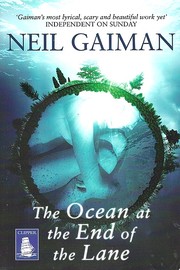
Magical Realism · 2013
by Neil Gaiman
A middle-aged man returns to his childhood lane and remembers what he tried to forget.